
Meet Tucker Purcell: The Golden Retriever Redefining Canine Courtesy
In an age dominated by fast-paced, often chaotic viral content, one dog has captured the global imagination by demonstrating remarkable restraint and impeccable manners. Tucker Purcell, a magnificent Golden Retriever, has become an international sensation known affectionately as “Tucker the Gentleman” or the “Courteous Canine,” thanks to his uniquely delicate approach to accepting treats.
Unlike many dogs who enthusiastically snatch food, Tucker employs an astonishingly gentle technique, often using only his front teeth to delicately pluck a snack from a hand. This behavior has cemented his status as a beloved figure across social media platforms, offering a heartwarming reminder of the subtle, charming nuances of canine behavior.
The Phenomenon of the ‘Soft Mouth’: Understanding Tucker’s Technique
While Tucker’s courteous snacking style might seem like an extraordinary display of discipline, it is deeply rooted in the history and genetics of the Golden Retriever breed. This particular trait is known in canine circles as having a “soft mouth.”
Golden Retrievers were originally bred in the Scottish Highlands during the 19th century to retrieve game—specifically waterfowl—for hunters. It was crucial that these dogs could carry birds back without damaging them. A dog with a soft mouth could hold a delicate bird, like a grouse or duck, without leaving teeth marks or crushing the carcass.

The Behavioral Science Behind the Gentleness
Tucker’s viral videos showcase this inherited trait in a domestic setting. When he approaches a treat, the behavior is characterized by:
- Precision: He targets the treat with surgical accuracy, often avoiding contact with the hand entirely.
- Minimal Force: The use of only the incisors (front teeth) minimizes pressure, ensuring the treat is taken without any aggressive grabbing.
- Restraint: The slow, deliberate movement contrasts sharply with the typical rapid ingestion seen in many other breeds.
This behavior is not just cute; it is a testament to successful selective breeding and, likely, consistent positive reinforcement training from his owners. For dog owners, Tucker serves as an excellent example of how inherent breed characteristics can be channeled into endearing, polite behaviors.
The Rise of Tucker the Gentleman in the Digital Age
Tucker’s fame exploded across platforms like Instagram and TikTok, where short, engaging videos highlighting his gentle demeanor resonate powerfully with millions of users seeking positive, wholesome content. His consistent persona—the polite prince, the debonair doggo—has made him highly marketable and recognizable.
His social media presence has transformed him from a family pet into a global brand, demonstrating the immense power of viral pet content in the mid-2020s. The appeal lies in the anthropomorphism of his actions; viewers project human qualities of politeness and consideration onto his careful movements.
“The reason Tucker resonates so strongly is that his behavior is unexpected. We anticipate dogs to be enthusiastic and messy with food, but Tucker offers a moment of calm, deliberate elegance that is incredibly charming,” notes one prominent pet behavior specialist.

Impact on Pet Culture
Tucker’s popularity has contributed to a broader trend of celebrating canine intelligence and emotional depth online. His videos often spark discussions among pet owners about training techniques, breed-specific traits, and the importance of gentle interaction with animals. This shift focuses on appreciating the subtle, sophisticated behaviors pets exhibit, rather than just their energy or playfulness.
Key elements contributing to Tucker’s sustained viral success include:
- Consistency: Every video reinforces the “gentleman” persona.
- Relatability: The simple act of taking a treat is universal.
- Emotional Appeal: The videos evoke feelings of warmth, humor, and admiration.
Practical Implications for Dog Owners
For those inspired by Tucker’s impeccable manners, understanding the concept of the soft mouth can be beneficial, particularly for owners of retrieving breeds.
Encouraging Gentle Behavior
While Tucker’s trait is genetic, gentleness in taking treats can be reinforced through training. Techniques include:
- The ‘Take It’ Command: Teach the dog to wait for a specific verbal cue before touching the treat.
- Hand Feeding: Start by holding the treat loosely. If the dog snaps, immediately withdraw the hand. Only offer the treat when the dog approaches calmly and gently.
- Positive Reinforcement: Lavishly praise and reward the dog immediately after they take the treat gently. Avoid rewarding aggressive or hasty behavior.
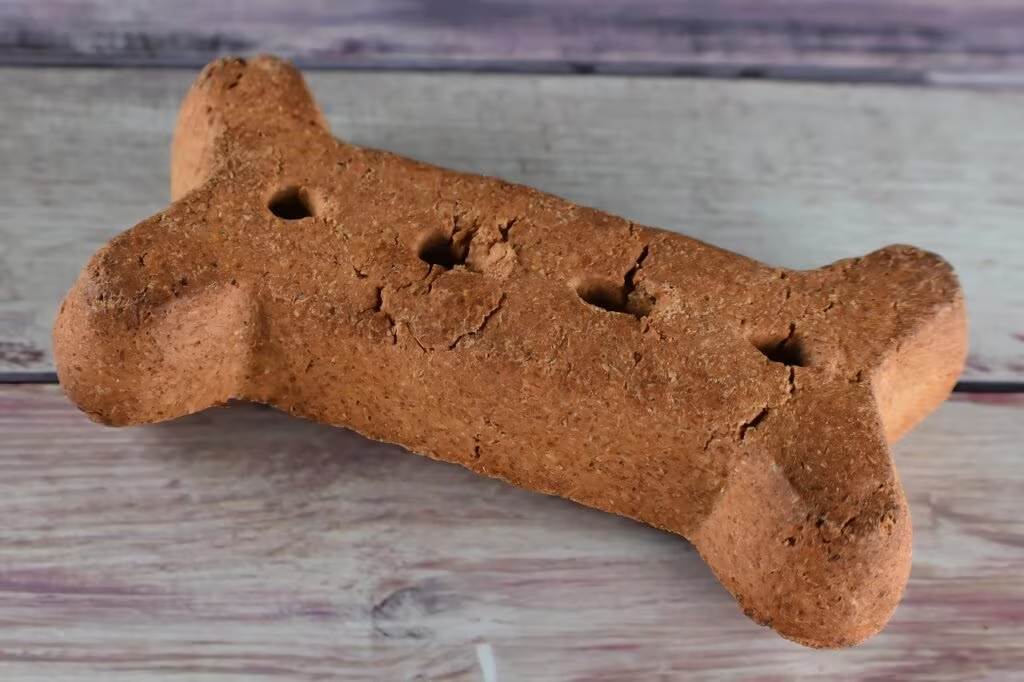
This focus on gentle interaction not only makes for a more polite pet but also strengthens the bond between the owner and the dog, fostering mutual trust and respect.
Key Takeaways
Tucker the Gentleman is more than just a viral star; he is a perfect illustration of breed heritage meeting modern celebrity. The key points defining his phenomenon are:
- Breed Trait: His gentle treat-taking is a manifestation of the “soft mouth” trait inherent to Golden Retrievers, bred for delicate retrieval.
- Viral Appeal: His courteous behavior provides wholesome, heartwarming contrast to typical online content, driving massive engagement.
- Training Example: Tucker serves as an aspirational model for dog owners seeking to reinforce gentle manners and restraint in their pets.
- Cultural Impact: His fame highlights the growing appreciation for subtle, sophisticated canine behaviors in contemporary pet culture.
Conclusion
Tucker Purcell, the Golden Retriever, has successfully carved out a niche in the crowded world of pet influencers by focusing on one simple, yet profound, quality: politeness. His story resonates because it taps into a universal desire for gentleness and good manners. As Tucker continues to charm audiences in 2025, he remains the definitive example of the dog who proves that sometimes, the most captivating behavior is the most courteous.
Original author: Jennifer Sandlin
Originally published: October 29, 2025
Editorial note: Our team reviewed and enhanced this coverage with AI-assisted tools and human editing to add helpful context while preserving verified facts and quotations from the original source.
We encourage you to consult the publisher above for the complete report and to reach out if you spot inaccuracies or compliance concerns.