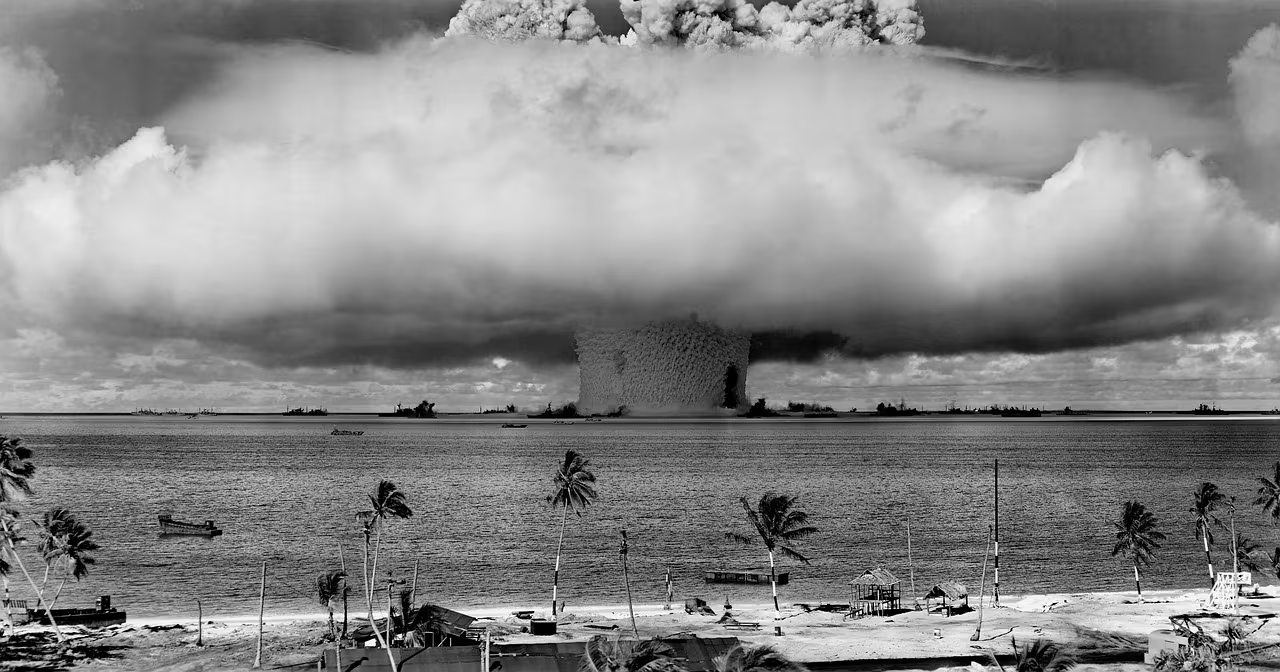
A New Era of Nuclear Testing: Trump Orders Preparation for First Detonation Since 1992
In a dramatic shift in U.S. defense policy, President Donald Trump announced a directive to the Pentagon to prepare for the resumption of full-scale nuclear weapons testing. The announcement, made on Thursday morning during a visit to Gyeongju, South Korea, signals the potential end of a voluntary moratorium the United States has observed for over three decades.
The President stated that the directive mandates the Pentagon to begin testing nuclear weapons on an “equal basis” with Russia and China. This move is widely interpreted as an attempt to project military strength and respond to perceived advancements in the nuclear capabilities of America’s primary geopolitical rivals.

If executed, this would mark the first U.S. nuclear detonation since 1992, fundamentally altering the global landscape of arms control and non-proliferation efforts.
The Rationale: Matching Rivals and Modernizing the Deterrent
President Trump’s rationale centers on the need to maintain a credible and modern nuclear deterrent in the face of alleged testing activities or rapid modernization efforts by other major powers. The phrase “equal basis” suggests a tit-for-tat approach, aiming to match the capabilities and pace of development set by Beijing and Moscow.
While the U.S. maintains its nuclear stockpile through advanced simulation and subcritical tests (which do not produce a nuclear yield), a full-scale test—a detonation—is seen by some defense hawks as necessary to validate new warhead designs or certify the reliability of aging weapons systems.
Key aspects of the directive include:
- Resumption of Testing: Preparing for physical, full-yield nuclear detonations.
- Parity Principle: Matching the testing frequency or scope of Russia and China.
- Location: Testing would likely occur at the Nevada Test Site (now the Nevada National Security Site), the traditional location for U.S. nuclear tests.
This decision comes amid growing concerns within the U.S. defense establishment regarding the expansion of China’s nuclear arsenal and Russia’s development of novel delivery systems, such as hypersonic missiles.
Breaking the 33-Year Moratorium
The United States last conducted a full-scale nuclear test on September 23, 1992. Following that test, President George H.W. Bush implemented a voluntary moratorium, which was subsequently extended by President Bill Clinton.
This moratorium became the foundation for the Comprehensive Nuclear-Test-Ban Treaty (CTBT), adopted by the United Nations General Assembly in 1996. The CTBT bans all nuclear explosions, for military or civilian purposes, anywhere in the world.
The Status of the CTBT
Despite being a key proponent of the treaty, the U.S. has signed but never ratified the CTBT. This means while the U.S. has adhered to the spirit of the treaty by refraining from testing, it is not legally bound by it. The Trump administration’s directive exploits this non-ratification status.
Other major nuclear powers have varying statuses:
- Russia: Signed and ratified the CTBT.
- China: Signed but not ratified.
- India, Pakistan, North Korea: Have not signed the CTBT and have conducted tests since 1992.
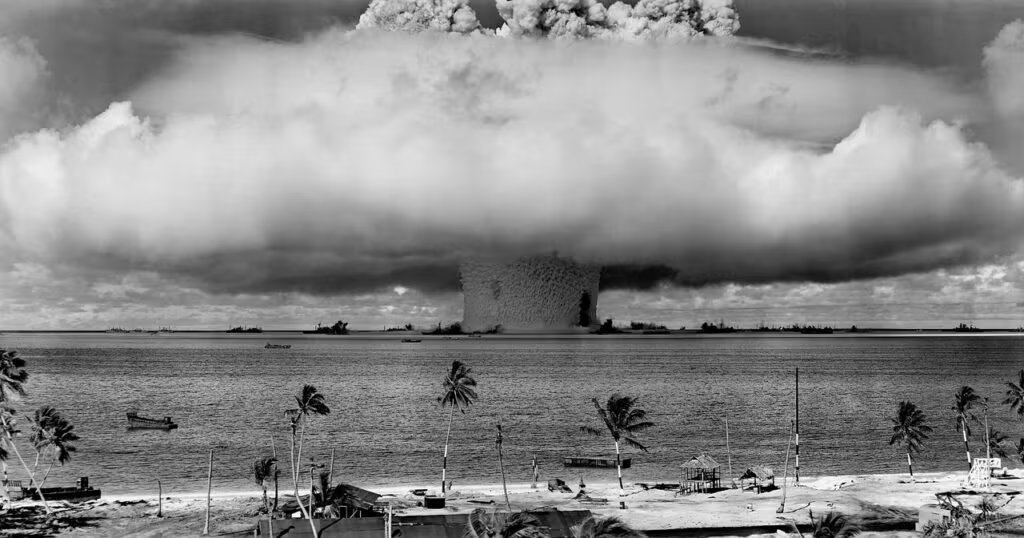
Resuming testing would effectively signal the U.S. withdrawal from the global consensus against nuclear detonations, regardless of its formal treaty status.
Geopolitical and Environmental Fallout
The implications of this directive are profound, reaching far beyond military readiness. Experts warn that the resumption of U.S. testing could trigger a dangerous new nuclear arms race.
Escalation Risk
If the U.S. proceeds with a test, it is highly likely that Russia, which has recently withdrawn ratification of the CTBT, would follow suit. China, which has also been accused of conducting low-yield tests, would face immense pressure to demonstrate its own capabilities. This could lead to a rapid destabilization of the decades-old framework of nuclear deterrence.
“This is a direct challenge to the global non-proliferation architecture built since the Cold War,” stated Dr. Eleanor Vance, a senior fellow at the Carnegie Endowment for International Peace. “The moment the U.S. breaks the moratorium, the political pressure on other non-ratifying states to test will become immense, potentially leading to a cascade of detonations.”
Environmental and Health Concerns
Nuclear testing, even underground, carries significant environmental risks. Past testing at the Nevada site resulted in radioactive contamination. While modern testing procedures are theoretically safer, any detonation raises concerns about seismic activity and the release of radioactive materials into the environment, particularly impacting communities near the test sites.
Global Reactions and Next Steps
The announcement, made during a high-profile foreign trip focused on security alliances, immediately drew sharp criticism from international bodies and non-proliferation advocates.
- Allies: European and Asian allies, who rely on the U.S. nuclear umbrella, expressed concern that the move could undermine diplomatic efforts to control nuclear proliferation, especially with North Korea and Iran.
- Arms Control Groups: Organizations like the Arms Control Association condemned the move, calling it reckless and counterproductive to global security.
- Congress: The directive is expected to face immediate scrutiny in Congress, which controls the funding necessary for the extensive preparations required for a test.

Crucially, a presidential directive is not the same as an immediate test. The Pentagon must now assess the logistical, technical, and budgetary requirements. Preparing a test site, ensuring safety protocols, and readying the necessary personnel and equipment could take many months, providing a window for diplomatic and legislative intervention.
Key Takeaways
President Trump’s directive to resume nuclear weapons testing is a landmark decision with immediate and far-reaching consequences:
- Policy Reversal: It ends the U.S. voluntary moratorium on full-scale nuclear testing observed since 1992.
- Geopolitical Rationale: The stated goal is to achieve “equal basis” testing parity with Russia and China.
- Arms Race Risk: The move significantly increases the probability of a new global nuclear arms race and destabilizes existing arms control frameworks.
- CTBT Status: The U.S. is able to make this move because it has signed but not ratified the Comprehensive Nuclear-Test-Ban Treaty.
- Timeline: The directive initiates the preparation phase; an actual test is not imminent but could occur within the next year, depending on funding and technical readiness.
What’s Next?
The immediate focus shifts to the Pentagon’s response and the reaction from Congress. Funding for the resumption of testing would require specific appropriations, offering lawmakers a crucial point of leverage to block or delay the directive. Furthermore, the international community will be watching closely for any retaliatory moves from Moscow and Beijing, which could determine the pace of this new, potentially dangerous, phase of nuclear competition.
Original author: Natalie Allison, Cat Zakrzewski, Katrina Northrop, Adam Taylor
Originally published: October 30, 2025
Editorial note: Our team reviewed and enhanced this coverage with AI-assisted tools and human editing to add helpful context while preserving verified facts and quotations from the original source.
We encourage you to consult the publisher above for the complete report and to reach out if you spot inaccuracies or compliance concerns.