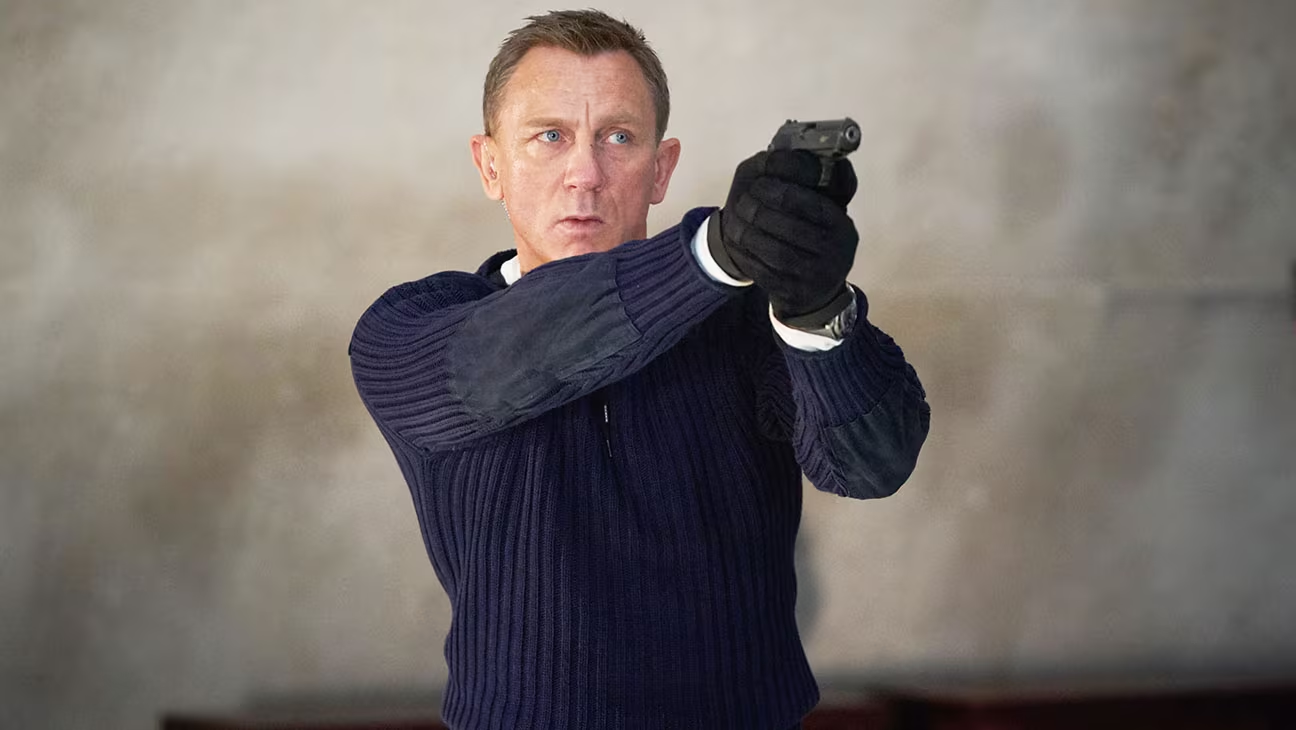
Unpacking the $8.5 Billion Deal: The Small Price for Creative Alignment
When Amazon finalized its massive $8.5 billion acquisition of Metro-Goldwyn-Mayer (MGM) in 2022, the crown jewel everyone focused on was the James Bond franchise. However, the price tag for securing the operational control of the world’s most famous spy was surprisingly small: approximately $20 million.
This seemingly minuscule figure—a fraction of the overall studio purchase—has led to confusion regarding what Amazon truly owns and, more importantly, who holds the ultimate power over the future of 007. The reality is that the $20 million was not the purchase price for the franchise itself, but rather a strategic payment to secure the necessary cooperation and alignment from the franchise’s creative gatekeepers.
The Complex Web of 007 Ownership
To understand the $20 million figure, one must first grasp the unique and highly protected ownership structure of the James Bond intellectual property (IP). Unlike most major film franchises, Bond is not solely owned by the studio that distributes it.
The Three Pillars of Bond Control
Amazon’s $8.5 billion purchase gave them ownership of the MGM library, which included a 50% stake in the Bond film franchise, historically held through United Artists. However, the other half, and crucially, the creative direction, rests with the heirs of the franchise’s founders.
- MGM/Amazon (50% Stake): Amazon now controls the studio side, including distribution rights and the existing film library.
- Eon Productions (Creative Control): Controlled by producers Barbara Broccoli and Michael G. Wilson, the children of original producer Albert R. “Cubby” Broccoli. They operate through their company, Eon Productions, and hold an iron grip on all creative decisions.
- Danjaq LLC (The Holding Company): This is the holding company that owns the underlying literary rights and the other 50% of the film franchise rights. It is also controlled by the Broccoli family.
The $20 million payment was made specifically to Danjaq. This payment was necessary to ensure that the transition of MGM ownership to Amazon would not disrupt the delicate balance of power and would guarantee the Broccolis’ continued participation and approval moving forward.
Creative Control: The Unwritten Mandate
The low price tag for securing control underscores a fundamental truth about the Bond franchise: the money is secondary to the creative mandate held by the Broccoli family. The $20 million essentially bought Amazon a seat at the table and the assurance that the Broccolis would continue to produce the films under the new studio ownership.
Industry experts note that the non-public agreements surrounding the deal are far more valuable than the cash payment. These agreements solidify the Broccolis’ unprecedented level of creative control, which includes:
- Greenlight Authority: They must approve every single project, from the main films to any potential spin-offs.
- Casting Decisions: They retain final say over who plays James Bond.
- Distribution Strategy: They favor theatrical releases and have historically resisted the push for direct-to-streaming content.
“The Broccolis are the creative gatekeepers. Amazon bought the studio that owns half the rights, but they still need the Broccolis’ blessing for every single frame of film. The $20 million was a handshake to ensure that blessing continued under the new regime,” a source familiar with the negotiations stated.
This structure explains why Amazon, despite spending $8.5 billion on the studio that houses the IP, cannot simply launch a dozen Bond-related television series or spin-off films, as is common practice with other major franchises like Star Wars or the Marvel Cinematic Universe.
Implications for the Future of Bond Content
Amazon’s primary motivation for the MGM acquisition was to bolster its streaming service, Prime Video, with valuable, established IP. However, the terms of the Bond deal severely limit Amazon’s ability to vertically integrate the franchise into a streaming-first model.
What Amazon Can Do:
- Exploit the Back Catalog: Amazon gains immediate, exclusive access to the vast library of existing Bond films for Prime Video.
- Fund Future Films: Amazon provides the financial backing for the next generation of theatrical Bond films, which are guaranteed to be global box office successes.
What Amazon Cannot Easily Do:
- Develop Spin-offs: The Broccolis have historically resisted expanding the universe beyond the core 007 character, fearing dilution of the brand.
- Launch TV Series: While Amazon owns the rights to other MGM properties (like Rocky and RoboCop), creating a Bond television series without the Broccolis’ full creative buy-in is highly unlikely and potentially contractually restricted.
- Bypass Theatrical Release: The next Bond film is expected to follow the traditional blockbuster theatrical window before hitting Prime Video.
In essence, the $20 million payment was a premium paid to maintain the status quo—a necessary cost to ensure the continued, high-quality, and highly profitable stewardship of the franchise by the family that built it, even as the studio ownership changed hands.
Key Takeaways
- Total Acquisition Cost: Amazon purchased MGM for $8.5 billion in 2022.
- Bond Control Payment: A separate payment of approximately $20 million was made to Danjaq LLC (the Broccoli family holding company) to secure operational alignment and cooperation regarding the Bond franchise.
- Creative Veto Power: The Broccoli family (through Eon Productions) retains absolute creative control over the James Bond films, including casting and greenlighting.
- Streaming Limitations: This unique structure prevents Amazon from easily exploiting the IP for numerous streaming spin-offs or TV series, ensuring the franchise remains focused on high-budget theatrical releases.
Conclusion
Amazon’s acquisition of MGM was a strategic move for its content library, but the James Bond component remains a partnership defined by creative deference. The $20 million payment was a testament to the power of IP control in Hollywood; it was the cost of securing the goodwill of the only people who truly matter to the franchise’s integrity. For fans, this means the Bond films will likely continue to adhere to the high standards and deliberate pace set by the Broccolis, prioritizing quality theatrical events over rapid streaming expansion. The true value Amazon received was not ownership of the character, but the permission to continue the legacy.
What’s Next
As of 2025, the focus remains on the casting and development of the 26th James Bond film, the first under Amazon’s ownership of MGM. Given the established creative control, the announcement of the new 007 actor and the film’s direction will be entirely dictated by Barbara Broccoli and Michael G. Wilson, with Amazon serving as the financier and distributor, rather than the creative driver.
Original author: Alex Weprin
Originally published: October 22, 2025
Editorial note: Our team reviewed and enhanced this coverage with AI-assisted tools and human editing to add helpful context while preserving verified facts and quotations from the original source.
We encourage you to consult the publisher above for the complete report and to reach out if you spot inaccuracies or compliance concerns.