Why Your Brain Checks Out: Understanding Attention Lapses
It happens to everyone: you’re reading a report, driving a familiar route, or listening to a presentation, and suddenly you realize you haven’t processed the last few minutes of information. This common experience, often called “zoning out,” is more than just a momentary distraction. According to recent scientific research, these attention lapses are measurable neurological events, and they are overwhelmingly triggered by fatigue.
New findings shed light on the precise brain mechanisms that occur when attention fails, confirming that when you zone out, parts of your brain are essentially entering a state akin to sleep, even while you are technically awake and your eyes are open. Understanding this process is crucial, not just for productivity, but for safety, especially in tasks requiring sustained focus.
The Neurological Signature of Zoning Out
Scientists have long sought to understand the difference between simple distraction and true attentional failure. The research utilized advanced brain imaging techniques to track activity during periods where subjects failed to respond to stimuli, a clear indicator of an attention lapse. The results revealed a distinct neurological signature for zoning out, often referred to in the scientific community as a microsleep or a brief, involuntary episode of sleep lasting mere seconds.
What Happens in the Brain During a Microsleep?
When a person zones out due to fatigue, brain activity shifts dramatically. The key observations center on two major networks:
- The Default Mode Network (DMN): This network is typically active when the brain is at rest, daydreaming, or reflecting internally. During an attention lapse, the DMN shows a surge in activity, suggesting the brain has shifted focus inward, away from external tasks.
- Sensory Processing Suppression: Crucially, the areas of the brain responsible for processing external information—such as the visual cortex and the auditory cortex—show a significant drop in activity. This suppression explains why you can be looking directly at a page or a road sign but fail to register the information. The brain has effectively turned down the volume on the outside world.

This pattern of activity—high DMN engagement coupled with low sensory processing—is what distinguishes a fatigue-induced lapse from mere boredom or distraction. It is the brain attempting to compensate for a severe lack of rest by momentarily shutting down high-demand functions.
The Critical Link: Fatigue and Attention Failure
The most significant finding of this research is the undeniable correlation between tiredness and the frequency of these attention lapses. While a healthy, well-rested individual might experience occasional zoning out due to environmental factors, the likelihood and duration of microsleeps increase exponentially with sleep deprivation.
This connection has profound implications for daily life and public safety, particularly in high-risk environments.
Real-World Risks of Microsleeps
When attention lapses occur, they don’t just affect productivity; they compromise safety. Consider the following scenarios where even a few seconds of microsleep can be catastrophic:
- Driving: A lapse lasting just three to five seconds at highway speeds means traveling the length of a football field completely unsupervised. Fatigue-related crashes remain a major public health concern.
- Operating Machinery: Workers performing repetitive or complex tasks, such as monitoring control panels or operating heavy equipment, face increased risk of error or injury.
- Healthcare: Professionals requiring sustained vigilance, like surgeons or long-shift nurses, may experience performance degradation that impacts patient care.
“The data clearly shows that the brain is struggling to maintain wakefulness. Zoning out is a warning sign that your body is demanding sleep, and ignoring it can have serious consequences.”
Mitigating Attention Lapses: Practical Strategies
Since the science points directly to fatigue as the primary culprit, the most effective strategy for preventing zoning out is prioritizing restorative sleep. However, when immediate sleep is not an option, several techniques can help interrupt the cycle of attention failure and keep the brain engaged.
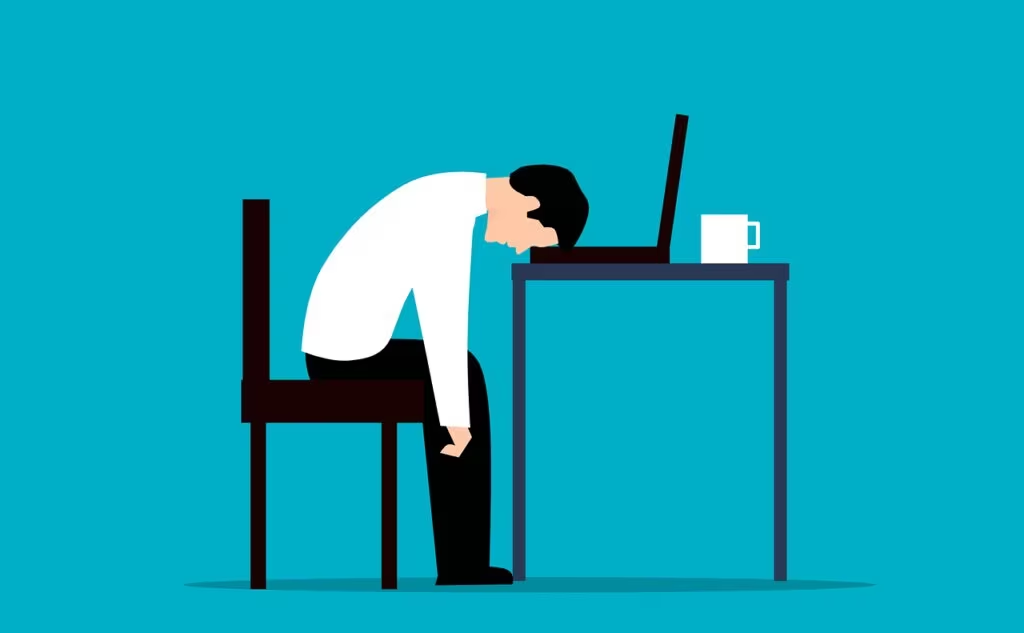
Strategies for Sustained Focus
- Prioritize Sleep Hygiene: Aim for 7 to 9 hours of quality sleep nightly. Consistency in sleep schedule is vital, as chronic sleep debt is the foundation for frequent microsleeps.
- Strategic Breaks (The Pomodoro Technique): Instead of pushing through fatigue, schedule short, deliberate breaks every 25 to 50 minutes. Stand up, move around, or engage in a non-screen activity to reset the DMN and re-engage sensory processing.
- Hydration and Nutrition: Dehydration and blood sugar fluctuations can exacerbate fatigue. Ensure consistent water intake and avoid heavy, high-sugar meals that lead to post-lunch energy crashes.
- Environmental Stimulation: If possible, change your environment. Increased light exposure, cooler temperatures, or even listening to music (if appropriate for the task) can help stimulate the brain and delay the onset of deep fatigue.
- Active Engagement: When performing repetitive tasks, try to introduce small variations or actively verbalize the steps you are taking. This forces the brain to use higher-level processing rather than relying on automatic, low-attention pathways.
Key Takeaways
This research transforms the perception of “zoning out” from a simple mental lapse into a significant indicator of neurological fatigue. The key points for readers are:
- Zoning Out is Measurable: Attention lapses are characterized by the Default Mode Network becoming highly active while sensory input areas are suppressed.
- Fatigue is the Driver: The frequency of zoning out is directly linked to sleep deprivation and overall fatigue.
- It’s a Microsleep: These lapses are essentially brief, involuntary sleep episodes that occur while the eyes are open and the person believes they are awake.
- Safety Risk: Even short microsleeps pose serious risks when performing tasks like driving or operating machinery.
- Prevention is Sleep: The most effective way to prevent zoning out is to ensure adequate, restorative sleep, followed by strategic breaks during periods of sustained concentration.
Conclusion
The scientific understanding of attention lapses provides a clear mandate: the human brain cannot effectively override its need for sleep. Zoning out is the brain’s emergency brake, signaling that it has reached its limit. Recognizing this signal and responding with rest, rather than caffeine or sheer willpower, is essential for maintaining cognitive function, productivity, and, most importantly, safety in a demanding world.
Original author: Korin Miller
Originally published: November 10, 2025
Editorial note: Our team reviewed and enhanced this coverage with AI-assisted tools and human editing to add helpful context while preserving verified facts and quotations from the original source.
We encourage you to consult the publisher above for the complete report and to reach out if you spot inaccuracies or compliance concerns.