Decoding the Legacy: An Expert Look at the Mustang Immersive Experience
Ford’s Mustang, the original “Pony Car,” holds a unique place in automotive and cultural history. To celebrate this enduring legacy, the touring exhibit, American Icon: A Mustang Immersive Experience, was designed to take visitors on a journey through the vehicle’s six decades of evolution.
While the experience successfully leverages high-tech presentation methods and showcases genuinely iconic artifacts, the overall reception has been mixed. The exhibit is lauded for its entertaining deep dive into Mustang lore but occasionally struggles to balance genuine historical reverence with modern, sometimes overly stylized, digital immersion.
This analysis breaks down the experience, focusing on what works—the undeniable power of the physical artifacts—and where the execution, particularly in the digital spaces, sometimes falls short of the Mustang’s legendary status.
The Immersive Journey: Technology Meets Nostalgia
The American Icon exhibit is structured to guide visitors through distinct phases, starting with high-tech, sensory-driven rooms before transitioning into more traditional museum displays. The initial sections are designed to be fully immersive, utilizing large-scale projections, soundscapes, and interactive elements to place the visitor inside the Mustang’s timeline.

These immersive rooms aim to capture the feeling of speed, freedom, and cultural impact the Mustang generated upon its debut in 1964. However, this is where the experience sometimes encounters friction. While the technology is impressive, the narrative delivery can feel forced or overly promotional, leading to the “cringey” moments noted by some critics.
The challenge for any brand-specific museum experience is maintaining journalistic distance while celebrating the product. When the digital storytelling leans too heavily into marketing jargon or overly sentimental narration, it risks alienating the enthusiast audience who came for authentic history.
The Transition to Tangible History
Fortunately, the exhibit quickly transitions from the digital spectacle to the tangible artifacts that form the core of the Mustang’s appeal. After navigating the initial immersive spaces, visitors encounter two more traditional, yet highly compelling, exhibition halls.
These halls serve as the anchor of the experience, providing the necessary context and credibility that only genuine, historically significant vehicles can offer.
Cinematic Icons and Automotive Stardom
One of the most powerful sections of the traditional exhibit is dedicated to the Mustang’s unparalleled career on the silver screen. Few cars possess the cinematic pedigree of the Mustang, which has starred in thousands of films and television shows, cementing its image as the quintessential American muscle car.
This section features several of the most famous Mustangs in movie history, allowing enthusiasts to get up close to the vehicles that defined generations of action and adventure.
The Legend of Eleanor
The centerpiece for many visitors is the display dedicated to Eleanor, the iconic 1967 Mustang Fastback featured prominently in the 2000 remake of the film Gone in 60 Seconds. This car, with its aggressive styling and powerful presence, symbolizes the peak of the classic muscle car era and remains one of the most recognizable movie vehicles ever produced.
The display provides detailed information on the modifications and history of the specific car used in the production, offering a deep dive into how Hollywood transformed an already legendary vehicle into an automotive superstar.
Other notable cinematic appearances highlighted in the exhibit include:
- The Bullitt Mustang: Celebrating the legendary chase scene featuring Steve McQueen’s 1968 Mustang GT.
- The Diamonds Are Forever Mach 1: Showcasing the Mustang’s role in the James Bond franchise.
- Modern Blockbusters: Highlighting the Mustang’s continued relevance in contemporary cinema and gaming.
The Evolution of the Pony Car
Beyond the movie stars, the exhibit meticulously traces the Mustang’s technical and design evolution across its seven generations, from the original 1964 1/2 model to the latest high-performance variants.
This historical timeline is crucial for understanding the Mustang’s staying power. Unlike many competitors, the Mustang successfully navigated several major automotive shifts, including the muscle car decline of the 1970s and the shift toward efficiency in the 1980s, without ever losing its core identity.
Key Milestones in Mustang History
The traditional displays effectively use text, photography, and original design sketches to illustrate critical moments:
- The Debut (1964): The revolutionary concept of the “Pony Car”—a sporty, affordable, and customizable coupe—creating an entirely new market segment.
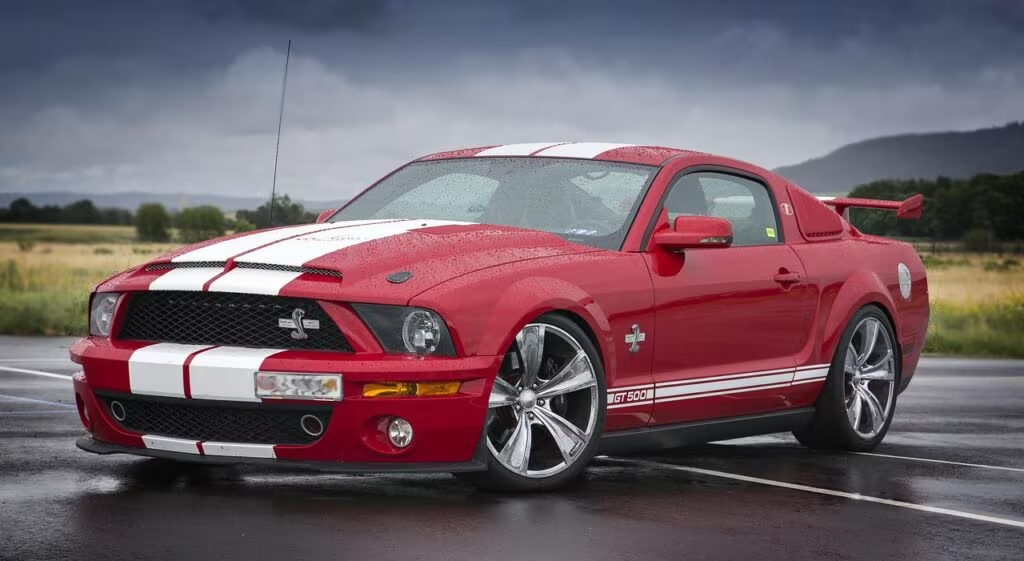
- The Peak (Late 1960s): The era of the Boss 302, Mach 1, and Shelby GT500, focusing on raw power and racing dominance.
- The Fox Body Era (1979–1993): The shift to a lighter, more modern platform that kept the Mustang relevant during challenging times for American performance cars.
- Retro-Futurism (2005 onwards): The successful return to classic design cues, blending modern technology with the iconic Fastback silhouette, ensuring its continued global popularity.
Key Takeaways for Visitors
For anyone considering visiting American Icon: A Mustang Immersive Experience, the value lies in the balance between the high-tech presentation and the genuine historical artifacts. While the immersive rooms may feel slightly overproduced, the opportunity to see the actual cars that shaped cinema and automotive culture is undeniable.
- Artifacts are the Highlight: The movie cars, especially the 1967 Eleanor, provide the most authentic and compelling part of the experience.
- Educational Value: The traditional displays offer a comprehensive and well-researched timeline of the Mustang’s technical and cultural evolution.
- Mixed Media Execution: Be prepared for a blend of genuinely exciting high-tech visuals and moments where the digital narrative feels less sophisticated than the vehicles it celebrates.
- Target Audience: Highly recommended for dedicated Mustang enthusiasts, film buffs interested in automotive cinema, and anyone seeking a detailed look at American industrial design history.
Conclusion: A Worthwhile Tribute to an Enduring Icon
American Icon successfully achieves its mission of celebrating the Ford Mustang. It is a feature-rich exhibit that demonstrates the enduring power of the Pony Car concept. By combining the flash of modern immersive technology with the substance of genuine automotive history, the experience offers a unique perspective on a vehicle that transcended mere transportation to become a global cultural symbol.
Despite the occasional misstep in digital execution, the sheer presence of the iconic vehicles, from the early models that launched a segment to the movie stars that defined a genre, makes this exhibit a valuable and highly entertaining stop for anyone interested in the intersection of technology, design, and American popular culture.
Original author: Logan K. Carter
Originally published: November 9, 2025
Editorial note: Our team reviewed and enhanced this coverage with AI-assisted tools and human editing to add helpful context while preserving verified facts and quotations from the original source.
We encourage you to consult the publisher above for the complete report and to reach out if you spot inaccuracies or compliance concerns.