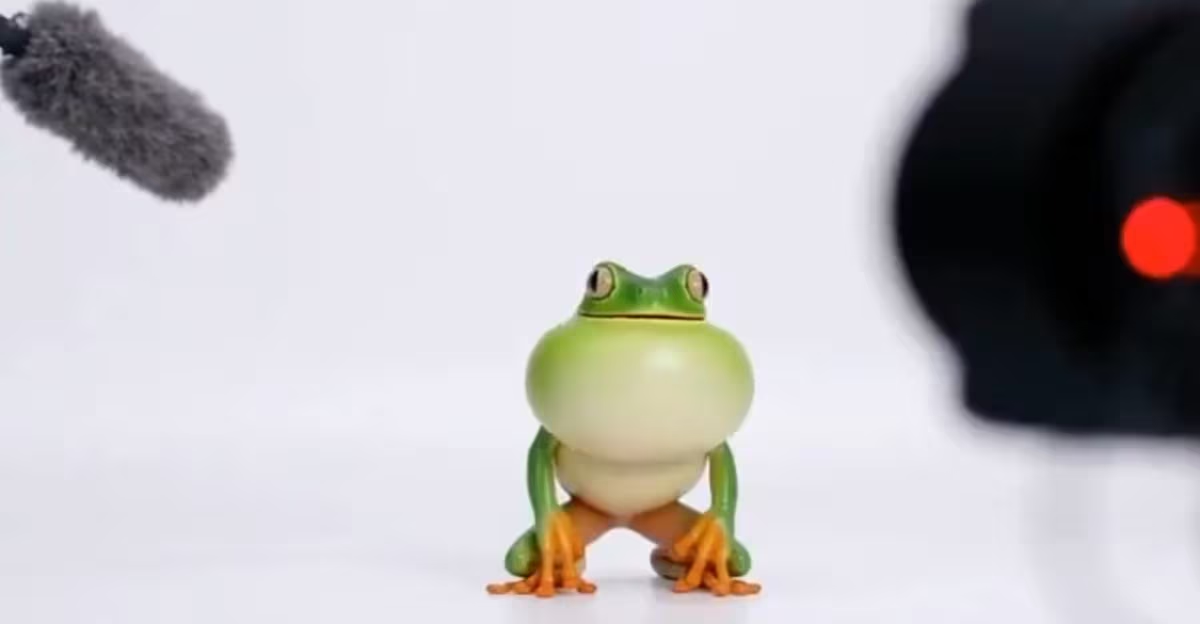
Sora’s Evolution: Moving Beyond Clips to Cohesive Storytelling
OpenAI has significantly advanced the capabilities of its text-to-video model, Sora, introducing two crucial features that move the platform closer to professional narrative production: reusable characters (or ‘cameos’) and the ability to stitch multiple video clips together into longer, multi-scene sequences. These updates directly address the most persistent technical hurdles in generative video—consistency and length—and mark a major step toward making Sora a viable tool for structured filmmaking.
For users and creators, this means the ability to maintain the identity of a specific person, animal, or object across various shots, angles, and scenes, alongside the power to combine those individual shots into a cohesive, flowing narrative.
Solving the Consistency Challenge: The Reusable Character Feature
One of the most significant limitations of early generative AI models was their struggle with object permanence and temporal consistency. If a user generated two separate clips featuring the same character, the character’s appearance, clothing, or even facial features often changed drastically between clips. This made creating sequential, professional content nearly impossible.
OpenAI’s new reusable character feature, sometimes referred to as ‘cameos,’ fundamentally solves this problem. Users can now define a character once—specifying their appearance, clothing, and style—and then prompt Sora to use that exact character consistently across multiple, independently generated video clips.
Why Character Consistency Matters
In traditional filmmaking, maintaining character continuity is foundational. For generative AI, achieving this requires the model to understand and lock down specific visual tokens related to the character, regardless of changes in the background, lighting, camera angle, or action. This technical breakthrough indicates a deeper understanding of the three-dimensional world and object identity within Sora’s underlying architecture.
Key benefits of reusable characters:
- Narrative Integrity: Ensures the story flows without jarring visual breaks.
- Efficiency: Eliminates the need for extensive post-production editing or regenerating clips due to character drift.
- Complex Scenes: Allows the same character to be placed in entirely different environments or performing different actions while retaining their core identity.
Enabling Narrative Depth: The Video Stitching Update
Previously, Sora was known for generating high-quality, single clips up to 60 seconds in length. While impressive, this limitation restricted its use for anything beyond short-form content or isolated scenes. The introduction of the video stitching capability changes this dynamic entirely.
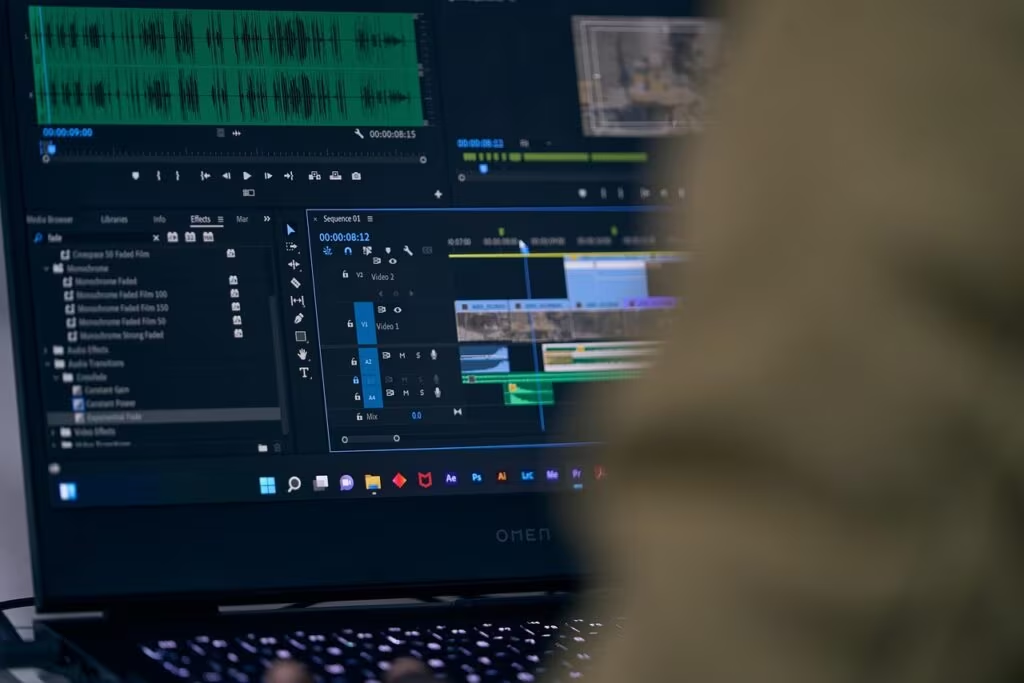
This feature allows users to combine several generated clips—each potentially featuring different scenes, camera movements, and the newly consistent characters—into a single, longer video file. This is essential for building structured narratives, such as short films, advertisements, or detailed explainers.
Practical Implications for Creators
The combination of character consistency and clip stitching allows creators to build complex sequences that adhere to a traditional storyboard structure. For example, a user could generate:
- A wide shot of Character A walking into a room.
- A close-up shot of Character A reacting to something.
- An over-the-shoulder shot showing Character A interacting with Character B (also consistent).
These three clips can then be seamlessly joined, creating a finished scene ready for final editing and sound design. This capability positions Sora not just as a novelty tool, but as a genuine asset in the pre-production and content creation pipeline.
“The ability to maintain consistent characters across multiple scenes was the last major technical hurdle preventing generative video from tackling true narrative storytelling. Stitching clips together is the necessary workflow layer that makes the model practical for professional use.”
Broader Impact on the Generative Video Landscape
These updates place significant pressure on competing generative video platforms, such as Runway and Pika, which have also been working to improve consistency and length. Sora, already recognized for its photorealistic quality and adherence to complex prompts, now offers the foundational tools needed for continuity.
This shift indicates that the focus of generative AI video development is rapidly moving away from mere visual fidelity and toward workflow integration and narrative control. As these tools become more accessible, the barrier to entry for high-quality video production will continue to drop, empowering independent filmmakers and small studios to prototype and produce content faster than ever before.
Key Takeaways
- Character Consistency: Sora now supports reusable ‘cameos,’ allowing users to define and maintain a character’s appearance across multiple generated clips.
- Narrative Length: The new video stitching feature enables the combination of individual clips into longer, multi-scene, structured videos.
- Technical Significance: These features solve major limitations (object permanence and temporal consistency) that previously plagued generative video models.
- Industry Impact: The updates accelerate Sora’s utility for professional narrative filmmaking, moving it from a clip generator to a potential storytelling engine.
Conclusion
The introduction of reusable characters and clip stitching fundamentally transforms Sora’s utility. By providing the tools necessary for continuity and narrative flow, OpenAI has addressed critical needs of the creative community. This evolution suggests that the future of video generation will be defined not just by the realism of the output, but by the model’s ability to integrate seamlessly into existing cinematic workflows, enabling creators to build complex, structured stories with unprecedented speed and consistency.
Original author: Jess Weatherbed
Originally published: October 30, 2025
Editorial note: Our team reviewed and enhanced this coverage with AI-assisted tools and human editing to add helpful context while preserving verified facts and quotations from the original source.
We encourage you to consult the publisher above for the complete report and to reach out if you spot inaccuracies or compliance concerns.