Unlocking the Eastern Dispersal: Crimea’s Role in Neanderthal History
For decades, paleoanthropologists have sought to trace the precise migratory routes of Neanderthals as they spread from their European strongholds eastward into Asia. New, groundbreaking analysis of ancient DNA recovered from key archaeological sites in the Crimean Peninsula has finally provided a crucial piece of this puzzle, illuminating the genetic pathways that connected Western European populations to their distant cousins in Siberia.
This research, published recently in a leading scientific journal, confirms that the Crimean region served as a vital, and likely repeated, geographic corridor for hominin dispersal during the turbulent Middle and Upper Paleolithic periods. The findings not only refine our understanding of Neanderthal movement but also provide critical context for the eventual transition and replacement by early modern humans (Homo sapiens) across Eurasia.

The Crimean Gateway: A Critical Geographic Bottleneck
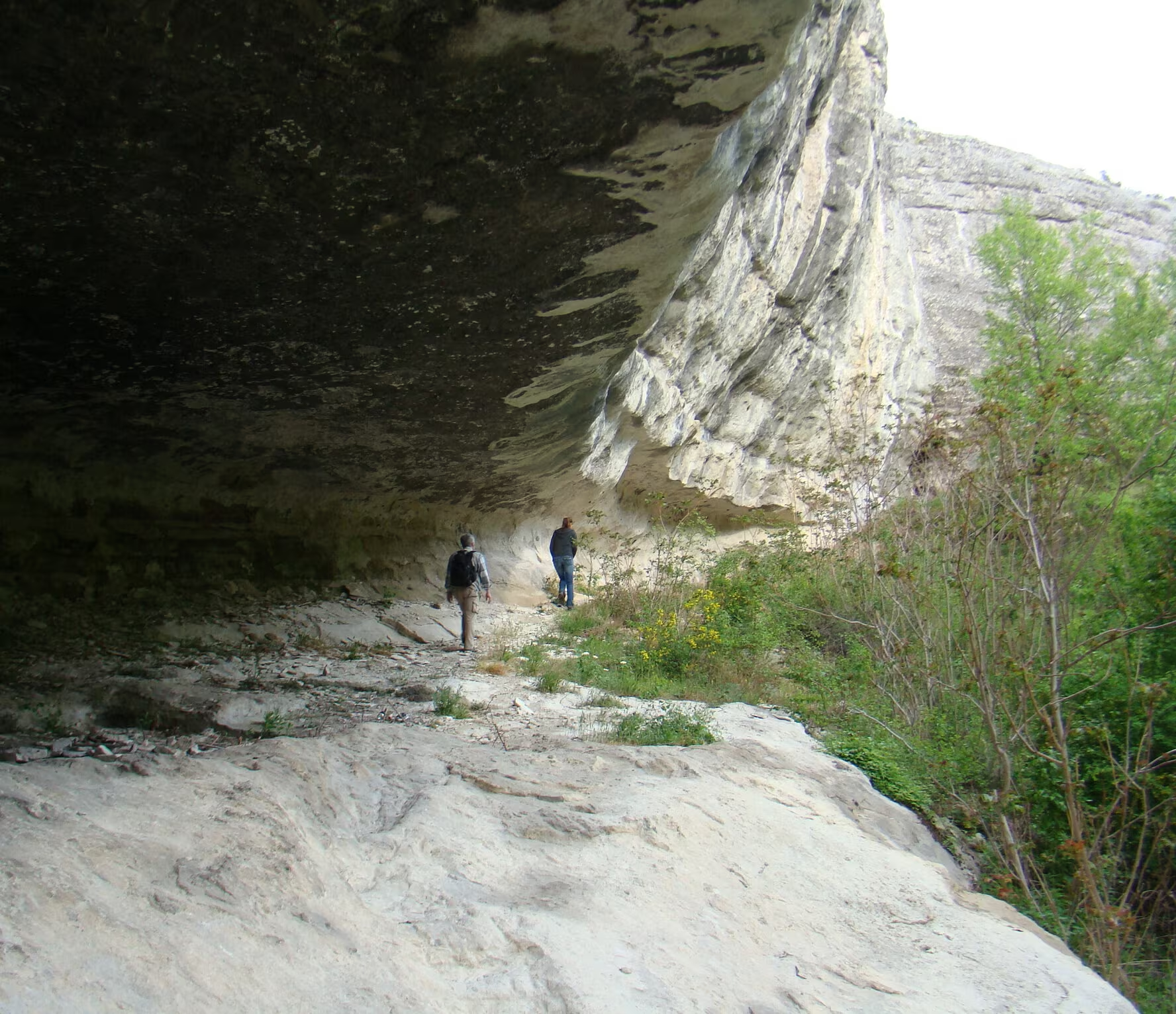
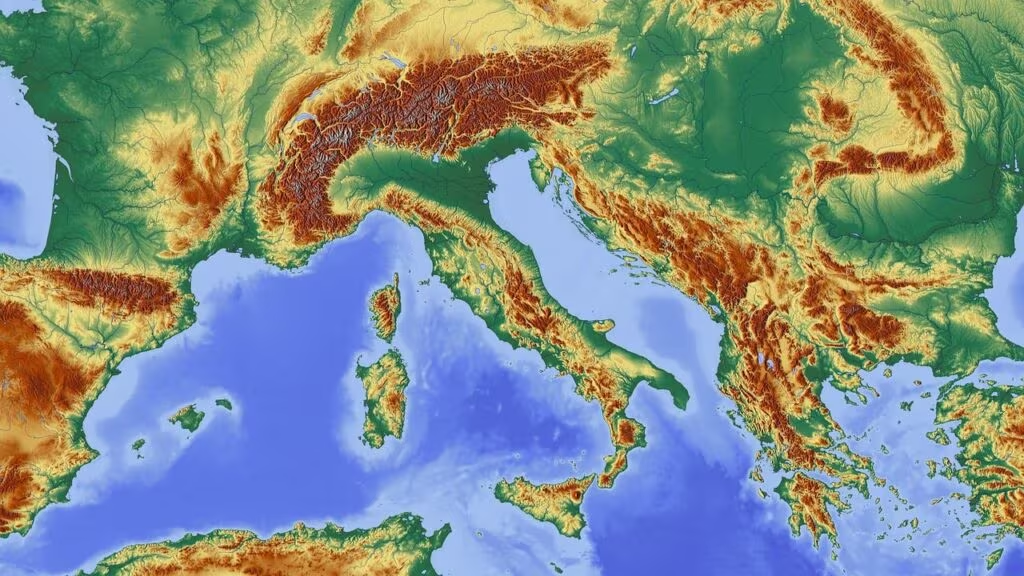
Archaeological sites in Crimea, such as Starosele and Zaskalnaya VI, have long been recognized for their rich deposits of Neanderthal artifacts and remains. However, their precise role in the larger narrative of Eurasian prehistory remained debated. Geographically, the Crimean Peninsula acts as a natural bridge, situated at the intersection of the European plain and the vast Pontic-Caspian Steppe, which leads directly into Central Asia and Siberia.
Researchers hypothesized that if Neanderthals were migrating eastward, they would almost certainly pass through this region, making the DNA preserved here a genetic snapshot of a critical moment in their history.
Analyzing Ancient Genetic Signatures
The research team successfully extracted and analyzed genetic material—specifically mitochondrial DNA (mtDNA) and fragments of nuclear DNA—from Neanderthal remains found within the Crimean caves. mtDNA is particularly useful for tracing maternal lineages and population movements over time.
The analysis revealed several key findings that demonstrate the crucial role of Crimea:
- Western European Linkages: The Crimean Neanderthal genetic profiles showed a strong and direct affinity with populations previously identified in Western Europe, particularly those from sites in France and Belgium, dating to the earlier Middle Paleolithic.
- Eastern Dispersal: Crucially, these Crimean lineages also shared genetic markers with later Neanderthal populations found thousands of miles to the east, including those associated with sites like Denisova Cave in the Altai Mountains of Siberia.
- Pulsed Migration: The data suggests that the migration was not a single, continuous wave, but rather a series of pulsed dispersal events, likely driven by climatic shifts, resource availability, or pressure from expanding Homo sapiens populations further west.
“The Crimean DNA acts as the genetic intermediary we have been searching for,” explained one of the lead geneticists. “It provides irrefutable evidence that this region was a major conduit, connecting the well-studied Neanderthal populations of Western Europe with the more enigmatic groups that reached deep into Asia.”
Rewriting the Timeline of Neanderthal Asia
Prior to this study, genetic models often relied on fragmented evidence, leading to uncertainty regarding the timing and frequency of Neanderthal movements into Asia. The new Crimean data allows scientists to calibrate these models with greater precision, suggesting that major dispersal events occurred earlier and more frequently than previously estimated.
Implications for the Middle Paleolithic
The Middle Paleolithic, spanning roughly 300,000 to 40,000 years ago, was characterized by significant climatic fluctuations. The new genetic evidence suggests that Neanderthals were highly adaptable, utilizing the Crimean corridor during periods when the steppe was more accessible, likely following migratory herds of large game.
This adaptability is key to understanding their long-term survival across diverse environments, from the cold forests of Europe to the arid steppes of Asia.

The Context of the Paleolithic Transition
The most significant implication of the Crimean findings lies in the context of the transition to the Upper Paleolithic—the period when Neanderthals ultimately disappeared, coinciding with the arrival and expansion of Homo sapiens.
If Neanderthal populations were already highly mobile and dispersed across vast distances, their eventual decline was likely not due to a simple lack of adaptability or range, but rather due to complex interactions with the incoming modern human groups.
The Crimean DNA evidence supports the following refined hypotheses:
- Genetic Mixing Potential: The established route through Crimea suggests a high potential for interaction and genetic exchange between different Neanderthal groups, maintaining a degree of genetic diversity across Eurasia.
- Refuge and Retreat: During periods of intense competition or environmental stress in Western Europe, the Crimean corridor may have provided a crucial retreat route, allowing some populations to persist longer in the East.
- Chronological Overlap: Understanding the precise timing of these eastern movements is vital for determining the chronological overlap between the last Neanderthals and the first waves of Homo sapiens entering Asia, which is central to the debate on interbreeding and replacement.
The Technical Challenge: Recovering DNA from Temperate Zones
Recovering viable ancient DNA (aDNA) from remains found in temperate regions like Crimea presents a far greater challenge than finding DNA in colder, more stable environments (like the permafrost of Siberia). Heat and humidity accelerate DNA degradation, often leaving only trace amounts or heavily fragmented sequences.
The success of this study underscores the rapid advancements in paleogenomics. Researchers utilized cutting-edge techniques, including targeted enrichment and high-throughput sequencing, to isolate and amplify the minute genetic fragments specific to Neanderthals, while filtering out widespread contamination from modern human DNA.
This methodological breakthrough sets a new standard for analyzing hominin remains from challenging temperate and subtropical climates, opening the door for similar studies in other crucial transitional zones across the globe.
Key Takeaways: What the Crimean DNA Tells Us
The new genetic evidence from Crimea fundamentally shifts the focus of Neanderthal research from isolated regional studies to a more interconnected, pan-Eurasian perspective. For the reader, the most important conclusions are:
- Confirmed Corridor: The Crimean Peninsula is confirmed as a primary, recurring migratory route for Neanderthals moving between Western Europe and Central/Eastern Asia.
- Genetic Intermediary: The DNA found in Crimea represents a genetic bridge, linking established Western European lineages with the distant Siberian populations (like Denisova Cave Neanderthals).
- Complex Dispersal: Migration eastward was not a single event but a series of pulses, reflecting Neanderthal adaptability to changing environments.
- Refined Chronology: The data provides better calibration for the timing of these movements, which is essential for understanding the eventual interaction and replacement dynamics with Homo sapiens.
Conclusion: A Deeper Understanding of Hominin Resilience
The story of the Neanderthals is one of remarkable resilience and adaptability, spanning hundreds of thousands of years across challenging environments. The new DNA evidence from Crimea offers a powerful reminder that their history was dynamic and geographically expansive, far exceeding the traditional image of isolated cave dwellers.
As paleogenomics continues to advance, future research will undoubtedly focus on extracting more nuclear DNA from these crucial Crimean remains. This will allow scientists to build a more complete demographic picture, detailing population sizes, interbreeding events, and the specific genetic traits that enabled Neanderthals to thrive along this critical Eurasian thoroughfare, right up until their final encounter with our own species.
What’s Next in Paleogenomics
Researchers are now expected to apply these advanced aDNA recovery techniques to other temperate sites along the proposed migration path, particularly in the Caucasus and the Caspian Sea region. The goal is to establish a continuous genetic timeline, potentially revealing the exact points of contact and interbreeding between Neanderthals and Homo sapiens as both groups navigated the challenges of the late Paleolithic era, approximately 45,000 to 40,000 years ago.
Original author: Krystal Kasal
Originally published: October 28, 2025
Editorial note: Our team reviewed and enhanced this coverage with AI-assisted tools and human editing to add helpful context while preserving verified facts and quotations from the original source.
We encourage you to consult the publisher above for the complete report and to reach out if you spot inaccuracies or compliance concerns.