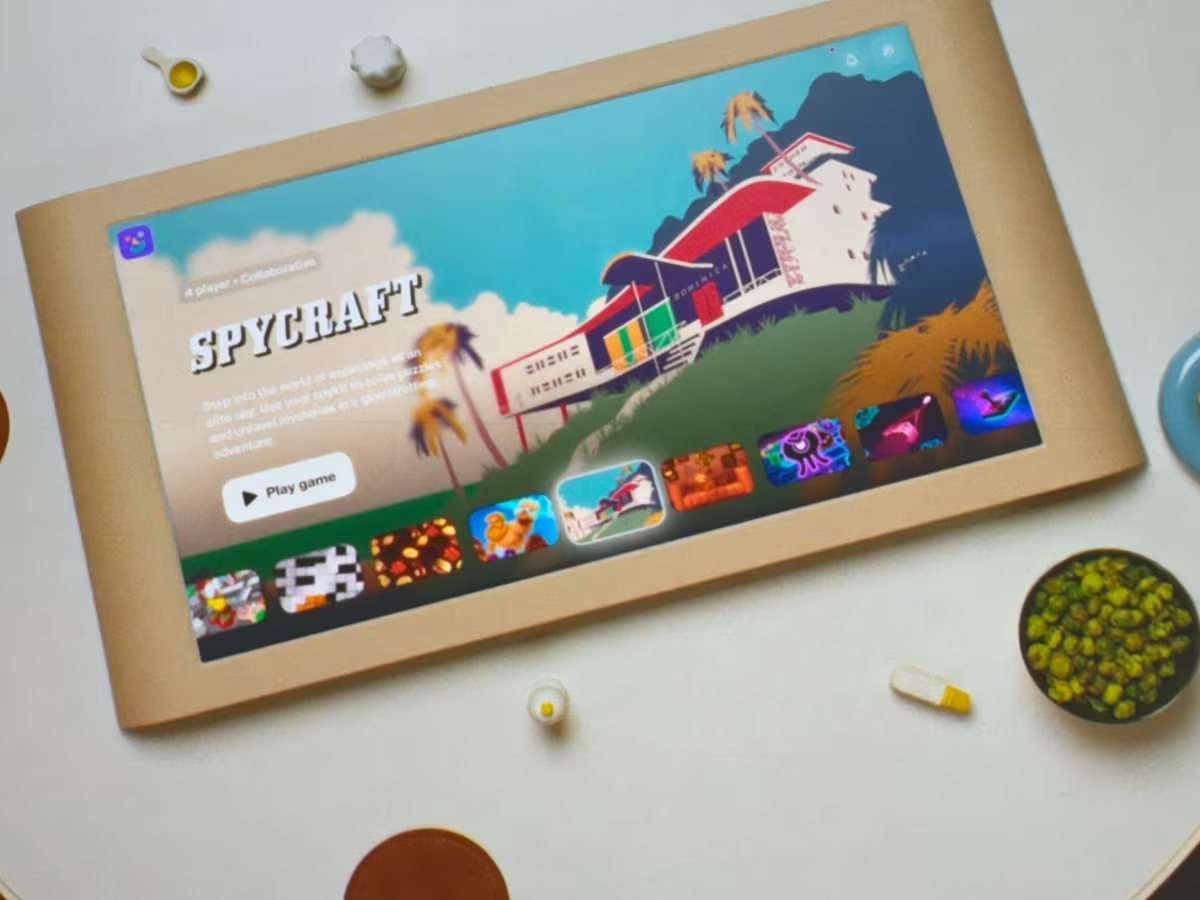
The Return of the Connected Screen Pioneer: Brynn Putnam Unveils ‘Board’

Brynn Putnam, the entrepreneur who successfully pioneered the connected fitness category with Mirror—the interactive screen acquired by Lululemon for $500 million in 2020—has officially launched her next venture. Her new startup introduces a novel connected screen device called Board, designed to revolutionize the way families and friends experience tabletop gaming.
Board is positioned not merely as a digital display, but as a hybrid gaming console that seamlessly merges the tactile, social engagement of traditional board games with the dynamic, immersive capabilities of video games. This move signals Putnam’s continued focus on integrating high-end technology into the home entertainment ecosystem, shifting her attention from fitness to communal play.
For readers searching for the next big thing in home tech, Board represents a significant development, leveraging Putnam’s proven expertise in creating desirable, premium connected hardware.
What is Board? Defining the Hybrid Gaming Experience
Board is designed to solve the inherent limitations of both physical and purely digital gaming formats. Traditional board games offer unparalleled social interaction but are constrained by fixed rules, complex setups, and manual scoring. Digital board games, while dynamic, often lose the physical, in-person connection.
Board aims to bridge this gap by providing an interactive surface that uses digital technology to enhance, rather than replace, physical components.
Bridging the Physical and Digital Divide
The core functionality of Board revolves around its ability to recognize and interact with physical game pieces placed on its surface. This allows for a gaming experience characterized by:
- Dynamic Rule Sets: Games can evolve in real-time. The digital layer handles complex calculations, random events, and rule variations that would be impossible or cumbersome in a static physical game.
- Automated Scoring and Setup: The screen manages all tracking, scoring, and complex game state changes, eliminating the need for players to manually manage tokens, paper, and complex rulebooks.
- Immersive Visuals: While the pieces are physical, the board itself can display dynamic animations, environmental changes, and visual cues, adding a layer of immersion typically reserved for video games.
- Social Focus: Unlike traditional video game consoles that often isolate players behind individual screens, Board is designed for communal, face-to-face interaction around a single shared surface, preserving the social essence of tabletop gaming.

The Hardware and Ecosystem
While specific technical specifications are proprietary, the device is understood to be a high-definition, durable screen built into a sleek console designed to fit into a modern living room—a design philosophy echoing the minimalist aesthetic of Mirror. The business model is expected to follow the connected hardware trend, combining an upfront purchase price for the device with a potential subscription service for access to a growing library of exclusive hybrid games and content updates.
The Legacy of Mirror: Putnam’s Expertise in Connected Home Tech
Brynn Putnam’s decision to pivot from connected fitness to connected gaming is underpinned by her unique expertise in developing premium, high-utility home hardware. The success of Mirror was not just about fitness; it was about integrating technology seamlessly into the home environment and creating a compelling, subscription-based content ecosystem.
Putnam’s track record demonstrates several key strengths that are directly applicable to the launch of Board:
- High-End Design: Mirror succeeded because it was aesthetically pleasing and non-intrusive, appealing to consumers willing to pay a premium for integrated technology.
- Content Strategy: Mirror established a robust content library and live class schedule, proving the viability of a subscription model built around hardware.
- Market Creation: Putnam identified and capitalized on a nascent market (connected, in-home fitness) before it became mainstream. Board aims to do the same for hybrid tabletop gaming.
“The fundamental challenge is bringing people together in a meaningful way, and technology, when used correctly, can enhance that connection rather than detract from it,” a source close to the company stated, emphasizing the social mission behind Board.
This background provides Board with immediate credibility, distinguishing it from typical crowdfunding projects or niche gaming peripherals.
Market Implications and Competition
Board enters a competitive, yet fragmented, entertainment market. It does not directly compete with major console manufacturers like Sony or Microsoft, but rather targets the intersection of the casual gaming, family entertainment, and tabletop enthusiast segments.
Positioning in the Gaming Landscape
Board occupies a unique space, avoiding direct conflict with established giants by focusing on the in-person, shared screen experience. Its competitors are less about processing power and more about social utility:
| Competitor Segment | Product Examples | Board’s Differentiating Factor |
|---|---|---|
| Traditional Tabletop | Catan, Monopoly | Dynamic rules, automated scoring, digital immersion |
| Digital Board Games | Steam adaptations, Mobile Apps | Physical, tactile interaction, shared physical space |
| Hybrid Consoles | Nintendo Switch | Dedicated to shared, tabletop surface interaction; premium home aesthetic |
If Board can successfully cultivate a strong library of exclusive hybrid titles that truly leverage the physical-digital interaction, it could establish a new, lucrative category in the connected home ecosystem.
The Challenge of Content
The primary hurdle for Board will be content development. Creating games that effectively utilize the hybrid technology requires specialized design that goes beyond simply digitizing existing board games. The success of the platform hinges on attracting top game designers capable of innovating within this new medium, ensuring the content library is compelling enough to justify both the hardware cost and the potential subscription fee.
Key Takeaways for Consumers and Investors
Brynn Putnam’s return to the connected home market with Board is a high-profile development that warrants attention from both tech enthusiasts and investors. The venture is built on a proven model of premium hardware supported by a content subscription.
- Founder Credibility: Brynn Putnam’s successful exit from Mirror provides immediate confidence in the execution and market strategy.
- Product Focus: Board is a hybrid gaming console designed to enhance the social, tactile experience of board games using dynamic digital elements.
- Market Niche: It targets the underserved intersection of physical tabletop gaming and high-tech home entertainment.
- Business Model: Likely involves a premium hardware purchase combined with a recurring subscription for content access.
- Critical Success Factor: The quality and quantity of exclusive hybrid game titles will determine the platform’s long-term viability.
Conclusion: A New Chapter for Connected Home Entertainment
Board is more than just a new gadget; it represents the next evolution in connected home entertainment, prioritizing shared, in-person experiences over individual screen time. By applying the lessons learned from the connected fitness boom—namely, that consumers value high-quality design and curated digital content—Putnam is attempting to define the future of family gaming.
If the platform can deliver on the promise of seamless physical-digital integration, Board could become as ubiquitous in the modern living room as the dedicated fitness screen became in the home gym, proving once again that the right connected hardware, backed by strong content, can create entirely new consumer categories.
Original author: Sarah Perez
Originally published: October 28, 2025
Editorial note: Our team reviewed and enhanced this coverage with AI-assisted tools and human editing to add helpful context while preserving verified facts and quotations from the original source.
We encourage you to consult the publisher above for the complete report and to reach out if you spot inaccuracies or compliance concerns.