Instant Creativity: Meta AI Transforms Instagram Stories Editing
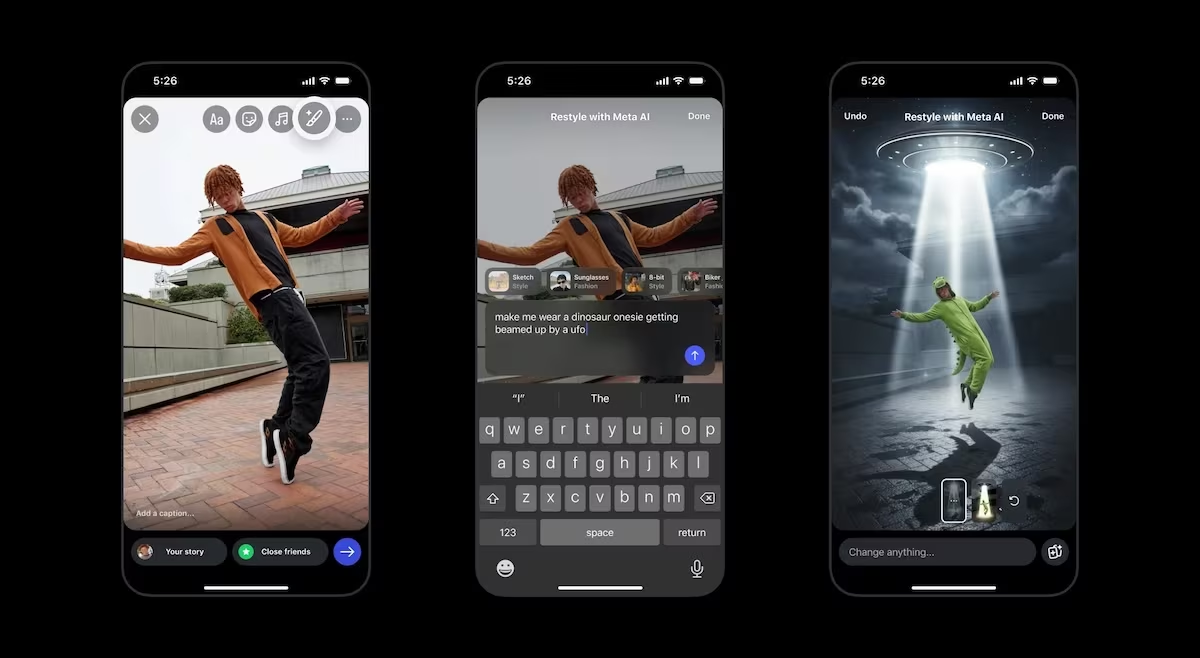
Meta has officially integrated its powerful AI-powered photo and video editing tools directly into the Instagram Stories workflow, marking a significant step in democratizing sophisticated generative content creation. Starting this quarter, users can leverage simple text prompts to instantly modify their media, enabling everything from subtle object removal to complete stylistic overhauls, all without leaving the app environment.
This integration places advanced artificial intelligence capabilities—previously confined to dedicated editing suites or separate apps—into the hands of Instagram’s massive global user base, prioritizing speed and accessibility in the content creation pipeline.
Deep Dive into the New Generative Features
The new suite of tools within Instagram Stories utilizes Meta’s proprietary generative models, allowing users to interact with their visuals using natural language commands. This represents a fundamental shift from manual, layer-based editing to prompt-based creation.
Core Capabilities for Story Creators
The in-app AI functionality focuses on three primary areas, giving creators unprecedented control over their visuals:
- Generative Fill and Removal: Users can select an area of a photo or video and use a text prompt to remove unwanted objects (e.g., deleting a person in the background) or add new elements that seamlessly match the existing lighting and perspective. For instance, a user could prompt, “Add a vintage neon sign above the door.”
- Background and Scene Replacement: The AI can isolate the subject and generate an entirely new background based on a description. A simple selfie taken indoors can be instantly transformed to appear as if it was taken on a “Mars landscape” or in a “1920s jazz club,” dramatically altering the mood and context of the Story.
- Style Transfer and Transformation: Beyond simple object manipulation, the tools allow for stylistic changes. Users can prompt the AI to render their photo in the style of a “watercolor painting,” a “comic book illustration,” or a “cinematic film noir” look, applying complex visual filters instantly.
This immediate, high-quality output drastically reduces the time and skill required to produce highly stylized, engaging content, directly addressing the demand for rapid, visually rich communication on the platform.
The Strategic Importance for Meta
This move is not just a feature update; it is a critical component of Meta’s overarching strategy to embed its Meta AI technology across its entire family of apps. By placing these generative tools directly within Instagram Stories, Meta achieves several strategic goals:
Driving Engagement and Retention
Instagram Stories remains a high-frequency, high-engagement format. By making content creation easier and more fun, Meta encourages users to post more frequently and experiment with complex visual concepts. This directly combats the competitive pressure from rivals like TikTok and Snapchat, which have also invested heavily in in-app creative tools and filters.
Data and Model Refinement
Every interaction with the generative tools provides valuable data, helping Meta refine its underlying large language and image models. The high volume of usage expected on Instagram will accelerate the improvement of the AI’s ability to understand complex prompts and generate photorealistic results.
Lowering the Barrier to Entry
Before this integration, achieving professional-looking edits often required external software like Adobe Photoshop or specialized video editors. Now, the power of generative fill—a feature that revolutionized professional editing—is available to billions of mobile users, effectively lowering the barrier for creative expression and ensuring Instagram remains the primary hub for visual sharing.
How Creators Can Utilize the New AI Workflow
Accessing the Meta AI editing tools is designed to be intuitive and integrated into the existing Story creation flow. When a user captures or uploads a photo or video to their Story draft, new AI options will appear alongside traditional stickers and filters.
Practical Steps for Using Text Prompts:
- Capture or Select Media: Start a new Instagram Story and choose the photo or video you wish to edit.
- Access AI Tools: Look for the new AI Edit icon (often represented by a generative symbol or a starburst) in the editing toolbar.
- Input Prompt: A text box will appear, prompting the user to describe the desired change. Prompts should be specific (e.g., “Change the sky to a dramatic sunset with purple clouds”).
- Review and Apply: The AI generates the result within seconds. Users can review the output and apply the edit directly to their Story.
This seamless integration means that content can be created, edited, and published in a fraction of the time, making real-time storytelling more dynamic and visually compelling.
Key Takeaways: The Future of In-App Editing
- Direct Integration: Meta AI editing tools are now native to the Instagram Stories creation interface.
- Prompt-Based Control: Editing is driven by simple text prompts, allowing users to add, remove, or transform elements.
- Generative Fill: Sophisticated generative fill capabilities are now accessible to the mass market, enabling seamless object manipulation.
- Strategic Move: The launch reinforces Meta’s commitment to embedding its generative AI models across its core platforms to boost engagement and compete with rivals.
- User Impact: The update significantly lowers the skill requirement for creating high-quality, stylized visual content.
Conclusion
The arrival of Meta AI editing tools in Instagram Stories is more than just a new set of filters; it signals the mainstream adoption of generative AI in daily social media use. By making complex editing instantaneous and accessible via natural language, Meta is setting a new standard for mobile content creation. Creators who master the art of the text prompt will be able to produce highly engaging, unique content faster than ever before, fundamentally changing the visual landscape of the platform in 2025 and beyond.
Original author: Lauren Forristal
Originally published: October 23, 2025
Editorial note: Our team reviewed and enhanced this coverage with AI-assisted tools and human editing to add helpful context while preserving verified facts and quotations from the original source.
We encourage you to consult the publisher above for the complete report and to reach out if you spot inaccuracies or compliance concerns.