Kirby Smart on Brian Kelly Firing: The Reality of Coaching at LSU
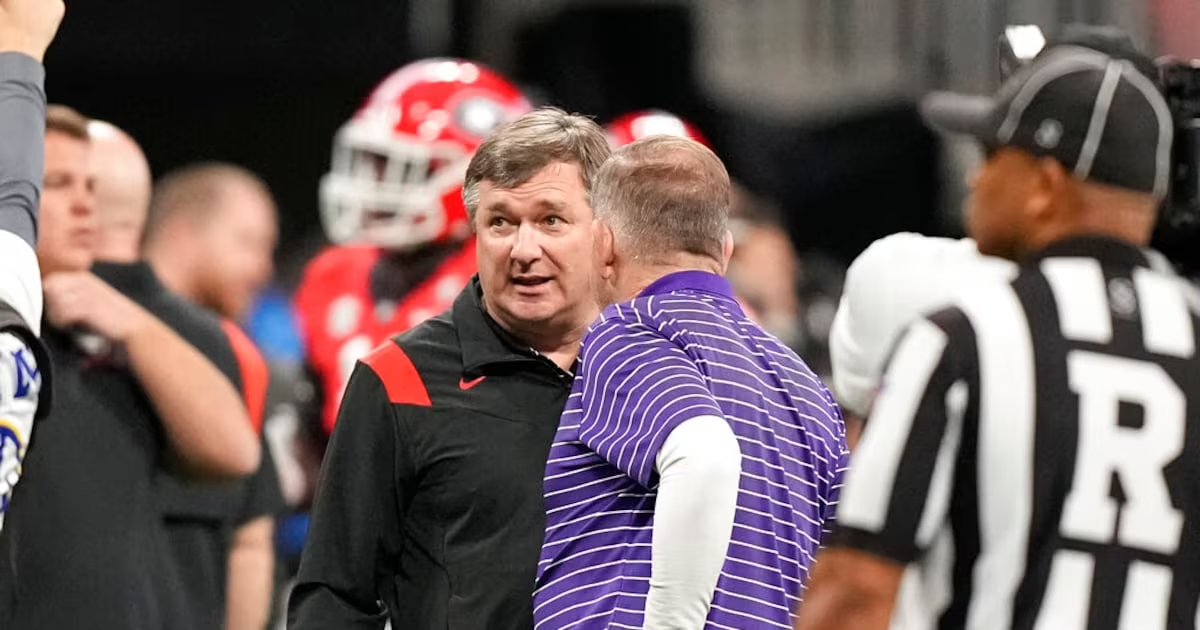
Georgia Head Coach Kirby Smart, a dominant figure in modern college football, offered a stark, insider perspective on the intense pressure inherent in the LSU football program following the recent, high-profile dismissal of coach Brian Kelly. Smart, who has direct experience coaching in Baton Rouge, framed the job not as a long-term career destination, but as a temporary assignment, emphasizing the brutal reality of the Southeastern Conference (SEC) coaching carousel.
Smart’s commentary provides crucial context for understanding why a coach of Kelly’s pedigree, hired just a few seasons ago, found himself abruptly removed from his position in 2025. His insight confirms the widespread belief that at certain SEC powerhouses, job security is virtually nonexistent when national championship expectations are not immediately met.
The “Borrowed Office” Analogy: Smart’s Insider View
Smart, speaking to reporters, drew upon his own time as an assistant coach at LSU to illustrate the precarious nature of the job. He recounted a conversation that perfectly encapsulates the program’s culture of immediate, unrelenting expectation.
Smart served as an assistant at LSU under Nick Saban in 2004. That experience gave him firsthand knowledge of the infrastructure and the demands of the program. He relayed the powerful analogy that defines the environment:
“I coached at LSU, and a guy once told me, he said, ‘That office you’re sitting in? You don’t own it. You’re borrowing it.’ And that’s the reality of coaching there. You have to understand that going in.”
This analogy highlights the lack of job security, regardless of past success or contract length, when the expectations of the fan base and administration are championship-or-bust every season. For Smart, who has built a dynasty at Georgia based on sustained recruiting dominance and administrative patience, the comparison underscores the difference between programs that prioritize stability and those that operate with a hair-trigger approach to change.
Context of Brian Kelly’s Departure
The firing of Brian Kelly sent shockwaves through the college football world in late 2024 or early 2025, given his status as one of the highest-paid coaches in the nation and his successful track record at Notre Dame. While Kelly achieved significant milestones during his tenure, including a strong recruiting haul and some high-profile victories, the program ultimately failed to consistently compete for the SEC West title or reach the College Football Playoff.
Smart’s comments suggest that the decision to part ways, despite the massive financial implications of Kelly’s contract buyout, was driven by LSU’s commitment to achieving immediate, elite results—a commitment that supersedes financial prudence or long-term rebuilding efforts. The standard in Baton Rouge is set by previous national championship coaches, and anything less than that level of contention puts the coach immediately on the hot seat.
The LSU Standard of Success:
- National Championship Pedigree: The program has won multiple national titles in the modern era, setting the bar exceptionally high.
- Recruiting Pressure: LSU is expected to dominate recruiting within the state of Louisiana and compete nationally for top talent.
- SEC West Dynamics: The highly competitive nature of the conference demands immediate relevance; a single disappointing season can derail momentum and trigger administrative action.
The SEC Pressure Cooker: Instability at the Top
Smart’s insight into the “borrowed office” mentality resonates because it speaks to the broader environment of the SEC, particularly for programs with national championship pedigree like LSU, Texas A&M, and Florida. The pressure cooker atmosphere means that coaching tenures are often significantly shorter than the average contract length.
Smart, having successfully navigated this landscape for nearly a decade at Georgia, understands that the job is highly transactional: deliver championships, or the office is quickly reassigned. His commentary serves as a validation for those who view the SEC coaching environment as the most volatile and demanding in all of sports. Coaches entering these roles must have their eyes wide open regarding the temporary nature of the position, regardless of the size of the contract they sign.
Key Takeaways from Smart’s Analysis
Kirby Smart’s candid remarks provide the definitive insider explanation for the volatility surrounding the LSU head coaching position:
- Job Insecurity is Systemic: The temporary status of the job is an accepted cultural norm within the LSU program, validated by Smart’s recollection.
- Expectations Outweigh Tenure: Even highly successful coaches like Brian Kelly are judged solely on immediate, elite results, not on long-term progress or rebuilding efforts.
- Financial Commitment is Secondary: LSU’s willingness to absorb a massive buyout underscores their prioritization of winning over financial stability.
- Expert Confirmation: Smart, as a successful SEC coach and former LSU staffer, provides authoritative context for the program’s decision-making process.
Conclusion: The Cost of Chasing Championships
Kirby Smart’s analysis serves as a sobering reminder of the unique pressures facing coaches in the upper echelon of the SEC. The firing of Brian Kelly, despite the cost and disruption, confirms the philosophy Smart described: at LSU, you are merely borrowing the office until the next coach is ready to take the reins. For fans and analysts, Smart’s perspective offers the definitive insider explanation for the volatility that defines major college football programs that prioritize immediate, elite success above all else.
What’s Next for LSU Football
LSU now faces the challenge of conducting another high-stakes coaching search in 2025. The next head coach will inherit a talented roster but also the same immense pressure and the same “borrowed office” mentality. The administration must decide whether to seek a proven veteran or a rising star, knowing that the clock starts ticking immediately upon their arrival, demanding championship results within the first few seasons to avoid the same fate as their predecessor.
Original author: Mike Griffith
Originally published: October 28, 2025
Editorial note: Our team reviewed and enhanced this coverage with AI-assisted tools and human editing to add helpful context while preserving verified facts and quotations from the original source.
We encourage you to consult the publisher above for the complete report and to reach out if you spot inaccuracies or compliance concerns.