The Dorothy Project Launches Mission to Replicate the Astronaut Experience
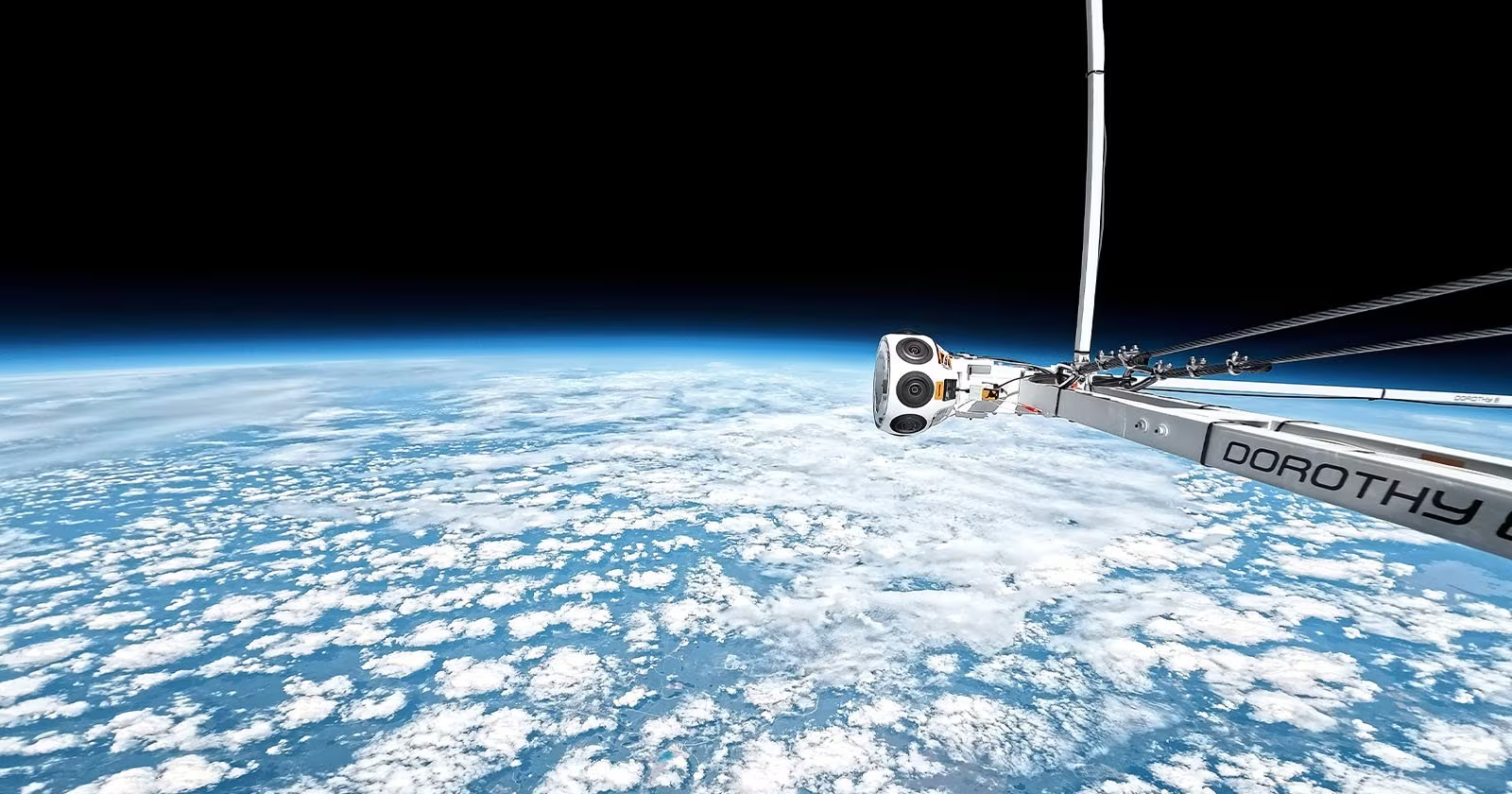
A unique collaboration between art, science, and technology has successfully sent a modified Insta360 camera to the edge of space, capturing stunning, immersive footage designed to evoke a profound psychological phenomenon known as the Overview Effect. The mission, spearheaded by The Dorothy Project, aims to use these breathtaking images to inspire a global audience to reconnect with Earth and recognize its fragility.
This endeavor goes beyond simple photography; it is a deliberate effort to democratize a perspective previously reserved for astronauts. By utilizing a high-altitude balloon and specialized camera technology, the project brings the visual and emotional impact of viewing Earth from afar down to the ground, making the cognitive shift accessible to everyone.
Understanding the Overview Effect
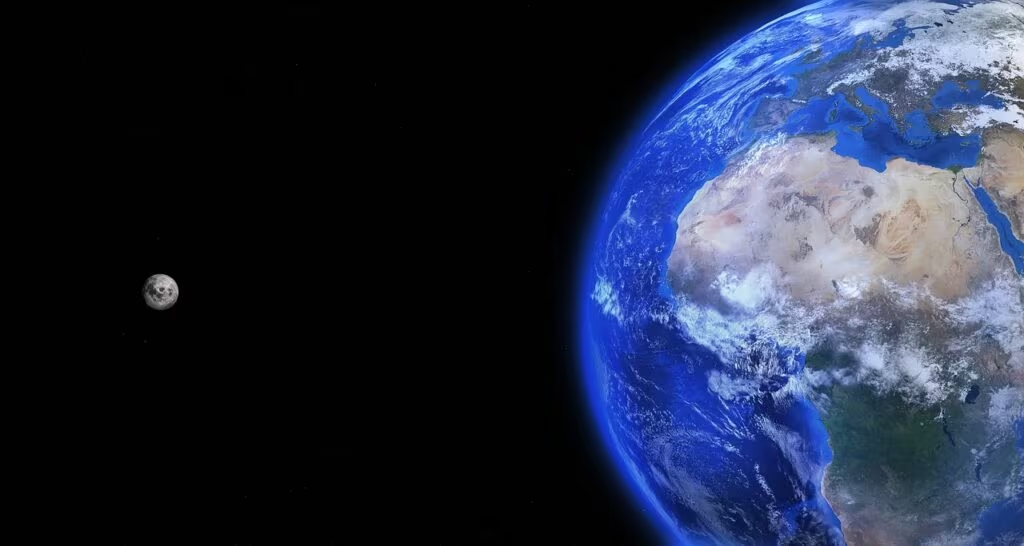
The core purpose of this mission hinges on the Overview Effect, a term coined by space writer Frank White in 1987. It describes the cognitive shift in awareness reported by astronauts during spaceflight, particularly when viewing the Earth from orbit or the Moon.
The Cognitive Shift
Astronauts frequently describe this experience as transformative, characterized by several key realizations:
- Unity and Connectedness: Seeing the Earth as a single, borderless entity, fostering a sense of global unity.
- Fragility of the Atmosphere: Observing the thin, vulnerable layer of the atmosphere that sustains all life, highlighting environmental urgency.
- Perspective Shift: Recognizing the triviality of human conflicts and political divisions when viewed against the vast backdrop of the cosmos.
For those who have experienced it, such as Apollo 14 astronaut Edgar Mitchell, the effect is often described as an instantaneous, intuitive understanding of the interconnectedness of life and the planet’s vulnerability. The Dorothy Project seeks to translate this powerful, life-altering perspective into a tangible media experience for those who will never leave the ground.
“You develop an instant global consciousness, a people orientation, an intense dissatisfaction with the state of the world, and a compulsion to do something about it. From out there, on the Moon, international politics look so petty.”
— Edgar Mitchell, Apollo 14 Astronaut
The Technology Behind the Ascent
Achieving the necessary altitude to capture the Earth’s curvature and the blackness of space required specialized equipment and engineering. The team collaborated closely with Insta360 to modify commercial off-the-shelf camera technology for the extreme conditions of the stratosphere.
Camera Modification and Payload Design
The standard Insta360 camera, known for its high-resolution 360-degree capture capabilities, had to be significantly hardened to survive the journey. The payload faced several critical environmental challenges:
- Extreme Cold: Temperatures in the stratosphere can plummet far below freezing, requiring specialized insulation and potentially internal heating elements to keep the battery and electronics operational.
- Low Pressure (Vacuum): The near-vacuum of the upper atmosphere necessitates careful sealing and material selection to prevent component failure.
- Radiation Exposure: While not as severe as deep space, the increased radiation at high altitudes requires robust shielding for the sensitive sensors.
- High-Speed Descent: The camera rig must survive the rapid descent and landing, often involving a parachute system and impact absorption.
The choice of a 360-degree camera is crucial. Unlike traditional photography, the immersive nature of 360-degree video allows viewers to control their perspective, mimicking the feeling of floating in space and looking around freely. This immersion is key to triggering the psychological depth required for the Overview Effect.
The Launch Mechanism
The camera payload was carried aloft by a high-altitude balloon filled with helium or hydrogen. These balloons are designed to expand dramatically as the surrounding atmospheric pressure drops. The launch reached the boundary layer often referred to as the ‘edge of space,’ typically around 100,000 to 120,000 feet (30 to 36 kilometers), well into the stratosphere.
This altitude is sufficient to clearly observe the curvature of the Earth, the thin blue line of the atmosphere (the limb), and the profound darkness of space above, providing the visual cues necessary for the Overview Effect.

The Dorothy Project: Blending Art, Science, and Activism
The Dorothy Project is not merely a technical exercise; it is an artistic and activist endeavor focused on environmental awareness. Their mission is rooted in the belief that direct, emotional connection is a more powerful motivator for change than statistics or scientific reports alone.
By framing the Earth as a fragile, singular entity floating in the void, the footage aims to bypass intellectual defenses and appeal directly to the viewer’s sense of responsibility.
The Role of Immersive Media
The use of immersive media, such as 360-degree video and virtual reality (VR), is central to the project’s strategy. Traditional flat images, while beautiful, lack the spatial presence that VR can provide. When viewed through a VR headset, the footage places the user virtually at the edge of space, allowing them to experience the scale and isolation that astronauts report.
This approach aligns with current trends in environmental communication, which increasingly leverage experiential technology to foster empathy and drive behavioral change. The project effectively turns a consumer camera into a tool for global consciousness.
Historical Precedents in Space Photography
The Dorothy Project follows a long tradition of space photography used for environmental and philosophical purposes. Iconic images like “Earthrise” (taken by Apollo 8 astronaut William Anders in 1968) and “The Blue Marble” (taken by Apollo 17 crew in 1972) fundamentally shifted public perception of the planet, sparking the modern environmental movement and leading to the creation of Earth Day.
This new wave of immersive 360-degree footage aims to achieve a similar impact for the 21st century, leveraging modern technology to make that perspective even more personal and immediate.
Key Takeaways: The Impact of Near-Space Imagery
The successful launch and recovery of the modified Insta360 camera mark a significant step in making the Overview Effect accessible to the public. The implications for environmental advocacy and education are substantial.
- Democratization of Perspective: The project successfully utilizes consumer-grade technology, adapted for extreme conditions, to capture views previously exclusive to government space agencies.
- Focus on Fragility: The resulting 360-degree footage emphasizes the thinness of the atmosphere and the isolation of the planet, reinforcing the urgent need for climate action.
- Immersive Experience: The use of 360-degree video and VR technology maximizes the potential for viewers to experience the profound cognitive and emotional impact associated with the Overview Effect.
- Art Meets Science: The collaboration highlights the growing trend of artists and scientists working together to communicate complex, large-scale issues like climate change through powerful, emotional narratives.
The mission by The Dorothy Project and Insta360 demonstrates the powerful potential of combining accessible technology with a clear, impactful scientific and artistic goal. By successfully sending a modified commercial camera to the stratosphere, they have captured not just images, but a perspective—the Overview Effect—that has historically motivated profound change.
As the footage is released and distributed, the project hopes to catalyze a renewed sense of stewardship among viewers, reminding us that regardless of political or geographical boundaries, we all share a single, fragile home suspended in the vastness of space. This endeavor serves as a compelling example of how technological ingenuity can be harnessed to achieve deep, humanistic goals.
What’s Next for the Footage
The captured 360-degree footage is expected to be utilized in various formats, including immersive VR experiences, educational installations, and public art projects globally. The goal is to maximize exposure to the Overview Effect, ensuring the message of planetary unity and environmental responsibility reaches the widest possible audience in the coming months of 2025.
Original author: Matt Growcoot
Originally published: October 28, 2025
Editorial note: Our team reviewed and enhanced this coverage with AI-assisted tools and human editing to add helpful context while preserving verified facts and quotations from the original source.
We encourage you to consult the publisher above for the complete report and to reach out if you spot inaccuracies or compliance concerns.