The Software Barrier to Basic Automotive Maintenance
The ongoing battle over the Right to Repair has escalated into the high-performance electric vehicle (EV) sector, following reports that the sophisticated software in the Hyundai Ioniq 5 N prevents owners from performing routine maintenance, such as changing brake pads, without specialized dealer tools.
This incident, reported by an Ioniq 5 N owner, highlights a growing concern among consumers and independent mechanics: as vehicles become highly integrated computer systems, manufacturers are gaining unprecedented control over who can access, diagnose, and repair them. For a performance vehicle designed for track use, where brake maintenance is frequent and critical, this restriction poses significant practical and economic challenges for owners.
The Ioniq 5 N Owner’s Experience
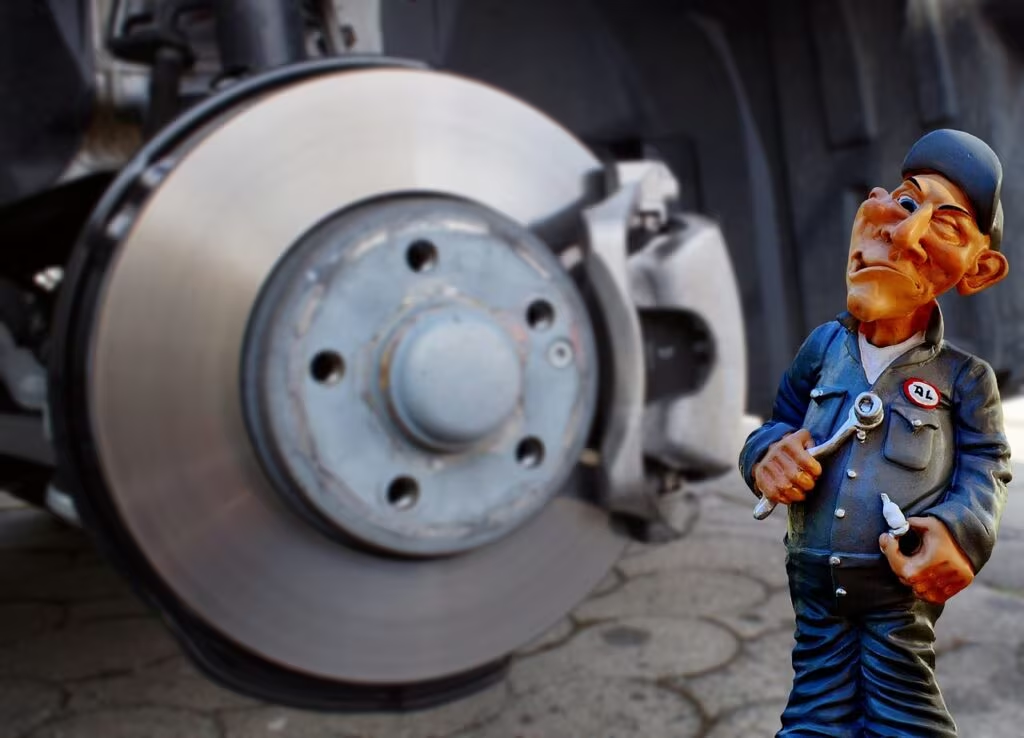
The core controversy stems from the requirement for a specific software command—or a “service mode”—to safely retract the caliper pistons, a necessary step when replacing brake pads. While this is common practice in modern cars equipped with Electronic Parking Brakes (EPBs), the issue with the Ioniq 5 N appears to be the manufacturer’s lockdown of the diagnostic port access required to initiate this service mode.
In traditional vehicles, independent mechanics and advanced DIY enthusiasts use standard OBD-II diagnostic tools to communicate with the car’s electronic control units (ECUs) and command the EPB into service mode. However, if a manufacturer restricts the communication protocols or requires proprietary authentication keys, these third-party tools become useless, forcing the owner back to the authorized dealership network.
The Technical Reality: Why Modern Brakes Need Software
To understand why a simple brake pad change is now a software operation, one must look at the integration of safety and performance systems in modern EVs, particularly high-performance models like the Ioniq 5 N.
- Electronic Parking Brakes (EPB): Unlike older cable-actuated systems, EPBs use small electric motors attached directly to the rear calipers. If a technician attempts to manually force the piston back (as in traditional brake jobs), they risk damaging the EPB motor or the gearing mechanism.
- Integrated Braking Systems: High-performance EVs often feature complex regenerative braking systems integrated with friction brakes. The vehicle’s software manages the blend between these two systems, and any maintenance requires the system to be put into a safe, diagnostic state to prevent errors or damage to sensitive components.
- Performance Calibration: The Ioniq 5 N, being a track-capable vehicle, relies on precise brake calibration. Manufacturers argue that unauthorized access or non-standard procedures could compromise the vehicle’s performance and safety systems, leading to liability issues.
This technical complexity provides the foundation for manufacturers to justify proprietary service requirements, but critics argue it is primarily a mechanism for controlling the lucrative post-sale service market.
Escalating the Right to Repair Debate
This incident is not isolated; it is a high-profile example of a systemic shift in the automotive industry. The Right to Repair movement advocates for consumer access to the parts, tools, and documentation needed to repair their own products, arguing that ownership should imply the right to repair.
For EVs, the debate is particularly intense because software is integral to nearly every component, from the battery management system to the infotainment unit and, now, the brakes.
Economic and Ownership Implications
When basic maintenance is restricted to authorized dealerships, the consequences for owners and the wider repair ecosystem are significant:
- Increased Cost of Ownership: Dealership labor rates and parts markups are typically higher than those of independent shops, driving up the long-term cost of owning a high-tech EV.
- Reduced Competition: Independent repair shops are locked out of servicing newer, more complex vehicles, leading to a shrinking market for competitive repair services.
- Inconvenience and Delays: Owners in rural areas or those needing quick turnaround times are entirely dependent on the often-busy schedules of authorized service centers.
- DIY Enthusiast Frustration: A significant portion of the automotive community enjoys performing their own maintenance. Software locks turn what was once a straightforward task into an impossibility, eroding the traditional relationship between owners and their vehicles.
“The ability to change brake pads is fundamental to car ownership, especially for a vehicle marketed for performance driving. If manufacturers can lock down basic consumables like this, it sets a dangerous precedent for total control over the vehicle’s lifecycle,” stated a representative from a leading automotive consumer advocacy group.
The Legal Landscape and Future Outlook
The legal fight over automotive repair access is ongoing. While some states and regions, like Massachusetts with its landmark Data Access Law, have mandated that manufacturers provide tools and data access to independent repairers, enforcement and compliance remain complex, especially when dealing with proprietary software interfaces.
Manufacturers often counter that these restrictions are necessary to protect intellectual property, ensure vehicle safety, and maintain warranty validity. However, as the Ioniq 5 N case demonstrates, the line between safety-critical systems and routine maintenance is becoming increasingly blurred by software integration.
Key Takeaways for EV Owners
For current and prospective owners of high-performance EVs, understanding the service limitations is crucial:
- Expect Software Dependence: Virtually all maintenance on modern EVs, even mechanical tasks, requires software intervention (e.g., service modes, battery disconnect procedures).
- Verify Independent Access: Before purchasing, research whether common maintenance tasks (brakes, suspension) can be performed using widely available third-party diagnostic tools.
- Check Warranty Terms: Understand how unauthorized modifications or repairs might void specific components of the warranty.
- Support Right to Repair: The ongoing legislative efforts are the primary way to ensure future access to repair data and tools.
Conclusion: The Control Shift in Automotive Technology
The reported restriction on brake pad replacement in the Hyundai Ioniq 5 N serves as a stark reminder that ownership in the age of high-tech EVs is fundamentally different from the mechanical ownership of the past. The power has shifted from the owner’s wrench to the manufacturer’s software key.
While the technical reasons for requiring a service mode are valid—protecting the integrated EPB system—the decision to lock out standard diagnostic tools transforms routine maintenance into a proprietary service. This trend reinforces the need for strong Right to Repair legislation globally to ensure that consumers retain control over their purchased property and can choose where and how their vehicles are serviced, maintaining competition and affordability in the automotive repair market.
What’s Next
Consumer advocacy groups are expected to use incidents like the Ioniq 5 N brake pad issue as evidence in ongoing legislative pushes for broader access to vehicle diagnostic data and proprietary tools. The industry will likely face increasing pressure to adopt standardized, non-proprietary service modes accessible via common OBD-II interfaces for routine maintenance tasks, balancing safety requirements with consumer rights.
Original author: Stephen Rivers
Originally published: November 9, 2025
Editorial note: Our team reviewed and enhanced this coverage with AI-assisted tools and human editing to add helpful context while preserving verified facts and quotations from the original source.
We encourage you to consult the publisher above for the complete report and to reach out if you spot inaccuracies or compliance concerns.