Former Champion Questions Aspinall’s Heavyweight Strategy After UFC 321
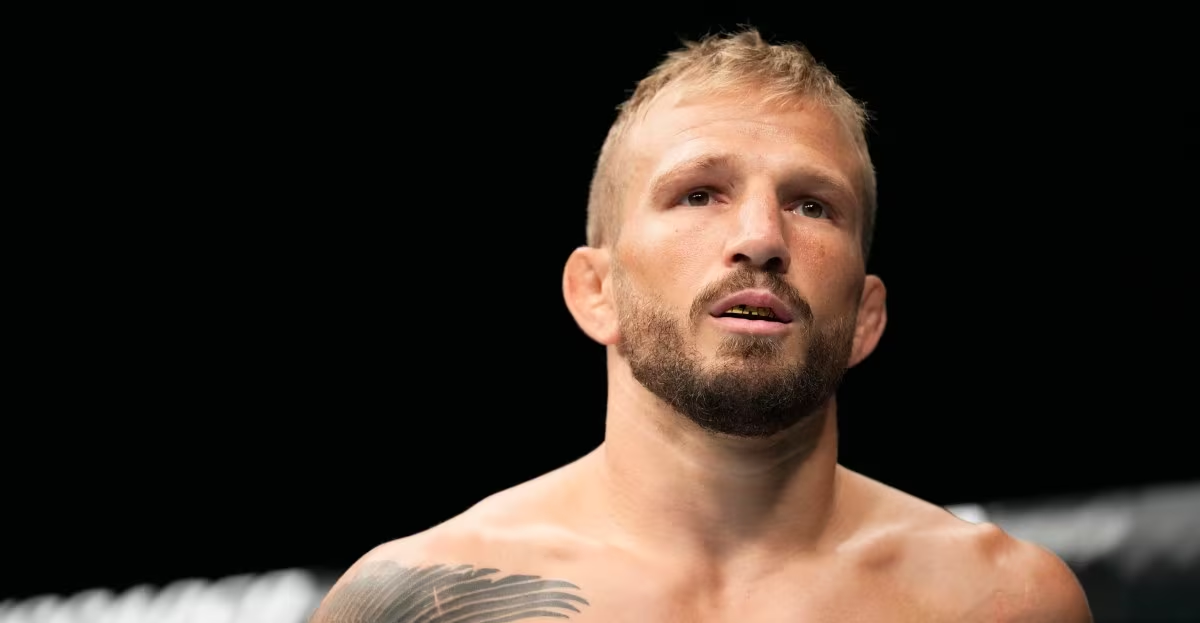
Following the recent events surrounding UFC 321, former two-time UFC Bantamweight Champion T.J. Dillashaw has weighed in on the ongoing debate surrounding Interim Heavyweight Champion Tom Aspinall. Dillashaw suggested that Aspinall’s recent public call-out of French contender Ciryl Gane might be a strategic move to avoid a more challenging path in the division.
Aspinall, who holds the interim title, became a major talking point in the mixed martial arts world, not for a fight he took, but for the one he publicly demanded. Dillashaw’s comments cut to the heart of the Heavyweight division’s current political landscape, implying a lack of competitive urgency from the British star.
The Core Criticism: Seeking the Path of Least Resistance
Dillashaw, known for his candid and often controversial opinions, did not mince words when discussing Aspinall’s decision to target Gane, a former interim champion who has twice failed to capture the undisputed title.
Speaking on the matter, Dillashaw suggested that Aspinall might be prioritizing a favorable matchup over the most direct route to unifying the titles. The implication is that Gane, while highly ranked, presents a less dangerous stylistic threat than other top contenders or the undisputed champion.
“I think Tom Aspinall is a great fighter, but when you’re the interim champion, your job is to push for the undisputed title fight, not pick and choose opponents,” Dillashaw stated. “Calling out Ciryl Gane right now, to me, looks like he might have taken the easier way out instead of waiting for the big one or fighting someone who poses a different kind of threat.”
This criticism centers on the perception of Gane as a high-profile, yet potentially predictable, opponent for Aspinall, who is widely regarded as one of the most complete heavyweights in the sport today. For Dillashaw, the focus should remain solely on the undisputed champion, Jon Jones, or the next clear contender.
Understanding the Heavyweight Hierarchy
To understand the gravity of Dillashaw’s comments, it is essential to review the current structure of the UFC Heavyweight division (as of early 2025):
- Undisputed Champion: Jon Jones (The reigning champion, often cited as the greatest fighter of all time, currently dealing with potential injury or scheduling delays).
- Interim Champion: Tom Aspinall (Secured the interim title, positioning him as the mandatory challenger for Jones).
- Top Contenders: Ciryl Gane (Ranked highly, known for his striking and movement) and Stipe Miocic (Former champion, expected to fight Jones upon his return).
Aspinall’s primary objective, according to UFC protocol, should be to unify the titles against Jones. However, with Jones’s timeline uncertain—especially concerning his potential retirement fight against Miocic—Aspinall faces a dilemma: wait indefinitely or stay active against a top-tier opponent.
By calling out Gane, Aspinall is choosing activity and a high-profile matchup over potentially long periods of inactivity. Dillashaw’s critique suggests that Gane represents a calculated risk—a major name that keeps Aspinall relevant without exposing him to the specific grappling threats posed by other elite contenders.
Why Gane is Perceived as the ‘Easier’ Option
While Gane is an elite striker, his perceived weakness lies in his grappling defense, particularly against high-level wrestlers and submission artists. Aspinall, possessing both elite striking and a strong Brazilian Jiu-Jitsu background, is seen by many analysts as having the perfect skillset to exploit Gane’s defensive gaps.
Conversely, a fight against a dominant wrestler or a power puncher with iron defense might present a more complex puzzle for Aspinall. Dillashaw’s comments echo a sentiment that Aspinall is strategically avoiding the most difficult stylistic challenges while waiting for the undisputed title shot to materialize.

The Context of Dillashaw’s Critique
Dillashaw’s perspective is informed by his own history in the sport, which includes navigating complex title pictures and making difficult career choices. As a former champion, he understands the political maneuvering required at the top level.
However, it is important to note the counter-argument: Aspinall is attempting to maintain momentum and competitive sharpness. Waiting for Jones and Miocic to settle their long-anticipated bout could sideline Aspinall for a year or more, a significant risk for a fighter in his prime.
Aspinall’s Argument for Fighting Gane:
- Activity: Staying active and earning money rather than waiting for an uncertain timeline.
- Marketability: Gane is a major international star, guaranteeing a high-profile event.
- Maintaining Momentum: Avoiding ring rust and keeping his name in the conversation.
Ultimately, Aspinall’s decision reflects the current instability at the top of the Heavyweight division. While Dillashaw views the Gane call-out as a competitive shortcut, others see it as a pragmatic business decision necessary to navigate a stalled title picture.
Key Takeaways and Implications
Dillashaw’s sharp critique highlights the ongoing tension between strategic matchmaking and the pursuit of the most competitive challenges in the UFC.
- Dillashaw’s Stance: The former champion believes Aspinall should prioritize the undisputed title fight against Jon Jones or face a contender with a more difficult stylistic match-up than Ciryl Gane.
- The ‘Easier Way Out’: This refers to the perception that Gane’s striking-heavy style and known grappling vulnerabilities make him a favorable opponent for Aspinall.
- Aspinall’s Motivation: The Interim Champion is likely seeking to remain active and capitalize on his current momentum while the undisputed title picture remains locked up by Jones and Miocic.
- Division Instability: The Heavyweight division is currently operating with two champions (undisputed and interim), creating confusion and forcing mandatory challengers like Aspinall to seek alternative, high-value opponents.
What’s Next for Tom Aspinall
Despite the criticism, Aspinall appears committed to securing a fight against Gane. If the matchup materializes, it would serve as a high-stakes, non-title eliminator for the right to face the winner of the anticipated Jones vs. Miocic bout (or whoever holds the undisputed title next).
If Aspinall successfully navigates Gane, the pressure on the UFC to schedule the title unification bout will intensify. However, if he loses, he risks losing his interim title status and falling back into the crowded field of contenders, validating Dillashaw’s implied warning about prioritizing strategic ease over competitive necessity.
Original author: Jed Meshew
Originally published: October 30, 2025
Editorial note: Our team reviewed and enhanced this coverage with AI-assisted tools and human editing to add helpful context while preserving verified facts and quotations from the original source.
We encourage you to consult the publisher above for the complete report and to reach out if you spot inaccuracies or compliance concerns.