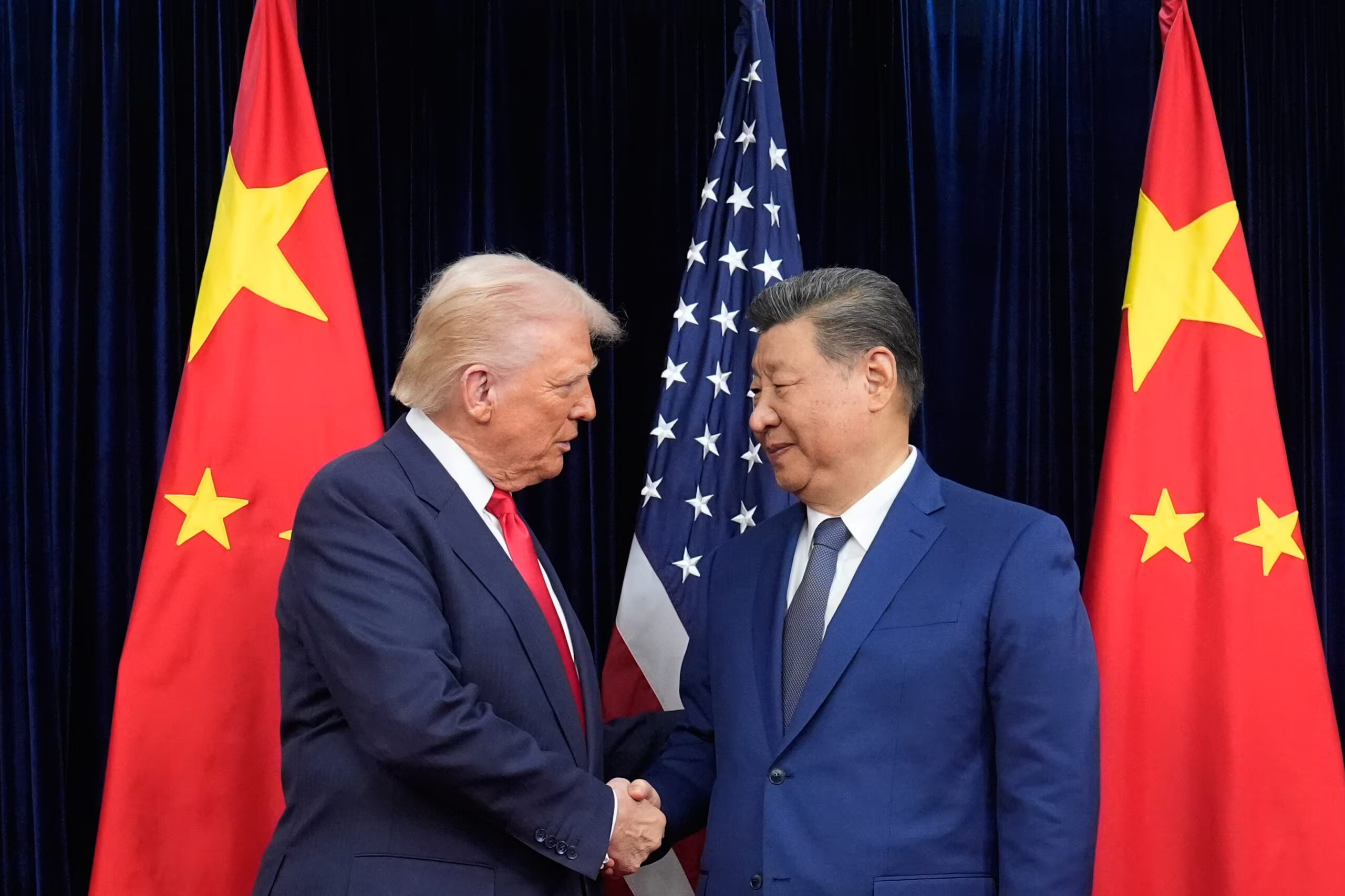
Landmark Soybean Deal Signals Shift in US-China Trade Dynamics
The ongoing volatility in U.S.-China trade relations saw a significant positive development this week, as the Treasury Secretary confirmed that China has agreed to an annual purchase of 25 million metric tons of U.S. soybeans. This massive commitment, announced amidst mixed signals from Wall Street regarding broader trade tensions and Big Tech earnings, represents a substantial step toward stabilizing the crucial agricultural sector of the bilateral economic relationship.
The announcement, which comes after years of strained trade negotiations and retaliatory tariffs, provides a much-needed boost of certainty for American farmers and commodity markets. While the overall U.S. stock market was observed to be drifting around its record heights, this specific agricultural agreement was a key factor being analyzed by investors, alongside the quarterly profit reports from major technology companies.

The Scale of the Commitment: Contextualizing 25 Million Metric Tons
For the agricultural industry, the figure of 25 million metric tons is highly significant. Soybeans are the single largest U.S. agricultural export to China, and before the trade war escalated in 2018, China was the primary destination for nearly 60% of all American soybean exports.
Why This Volume Matters
This annual commitment approaches, and potentially exceeds, the peak historical purchasing levels seen before the imposition of retaliatory tariffs. During the height of the trade conflict, Chinese purchases of U.S. soybeans plummeted, forcing American farmers to seek new markets and leading to significant government aid programs.
This new agreement effectively re-establishes China as the dominant buyer of American soybeans, offering several critical benefits:
- Price Stabilization: Guaranteed demand at this volume helps stabilize commodity prices and futures markets, reducing volatility for producers.
- Inventory Management: It helps draw down existing U.S. soybean inventories that accumulated during the trade slowdown.
- Trade De-escalation: The purchase serves as a tangible signal of goodwill and a commitment to meeting the purchasing targets outlined in previous trade agreements.
“This agreement, confirmed by the Treasury Secretary, is not just a number; it represents restored faith in the agricultural trade channel between the two largest economies. It’s a foundational piece for future, broader negotiations,” said an agricultural trade analyst.
Market Dynamics and Broader Economic Signals
The news of the soybean deal coincided with a period where the U.S. stock market was showing mixed reactions. While the agricultural sector experienced immediate positive sentiment, the broader market was simultaneously grappling with the implications of Big Tech behemoths releasing their quarterly profit reports.
High-profile earnings from technology giants often dictate the direction of major indices like the S&P 500 and the Nasdaq Composite. The market’s overall ‘drifting’ behavior suggests that while the trade news was positive, investors were balancing this against the complex and sometimes contradictory signals from corporate profitability and global economic outlooks.
The Dual Influence on Wall Street
| Market Driver | Impact on Sentiment | Sector Affected |
|---|---|---|
| China Soybean Deal | Positive certainty, reduced risk | Agriculture, Commodities, Shipping |
| Big Tech Profits | Mixed results, high volatility | Technology, Growth Stocks, Indices |

Implications for US-China Relations
While the soybean commitment is a major win for the agricultural lobby and a clear sign of economic engagement, experts caution that it does not resolve the deeper structural issues plaguing the U.S.-China relationship.
The trade dispute extends far beyond agriculture, encompassing intellectual property rights, technology transfer, industrial subsidies, and geopolitical competition. The 25 million metric ton purchase is best viewed as a targeted economic concession designed to maintain stability in a politically sensitive sector, rather than a comprehensive end to the trade war.
Moving Forward
This agreement sets a precedent for future sector-specific deals. The focus now shifts to whether similar large-scale commitments can be secured for other key U.S. exports, such as energy products and manufactured goods. The success of this soybean deal will likely influence the tone and pace of high-level trade talks scheduled throughout the remainder of 2025.
Key areas that remain contentious include:
- Tariff Removal: The status of existing tariffs on hundreds of billions of dollars worth of goods remains a major hurdle.
- Technology Competition: Disputes over 5G technology, semiconductors, and AI dominance continue to fuel tensions.
- Enforcement Mechanisms: Ensuring China adheres to the agreed-upon purchasing volumes and structural reforms is crucial for long-term trust.
Key Takeaways
This confirmed annual purchase of U.S. soybeans is a critical development in global trade, providing immediate clarity and relief to the agricultural sector:
- The Commitment: China has agreed to purchase 25 million metric tons of U.S. soybeans annually.
- The Source: The deal was confirmed by the Treasury Secretary.
- Historical Context: This volume restores purchasing levels close to pre-trade war peaks, significantly benefiting American farmers.
- Market Impact: The news provided positive momentum to commodity markets, offsetting mixed signals from broader stock market movements influenced by Big Tech earnings.
- Trade Status: While a major step forward, the agreement addresses only one sector and does not resolve the fundamental structural trade disputes between the two nations.
Conclusion: A Foundation for Stability
The commitment by China to consistently purchase 25 million metric tons of U.S. soybeans each year is a powerful indicator that, despite ongoing geopolitical friction, both Washington and Beijing are prioritizing economic stability in critical sectors. For the U.S. agricultural industry, this deal provides the long-term demand certainty necessary for planning and investment. While the broader trade relationship remains complex and subject to political headwinds, this agreement establishes a vital foundation of commercial engagement that could pave the way for further de-escalation throughout 2025.
Original author: Bridget Brown, Bernard McGhee, Curtis Yee
Originally published: October 30, 2025
Editorial note: Our team reviewed and enhanced this coverage with AI-assisted tools and human editing to add helpful context while preserving verified facts and quotations from the original source.
We encourage you to consult the publisher above for the complete report and to reach out if you spot inaccuracies or compliance concerns.