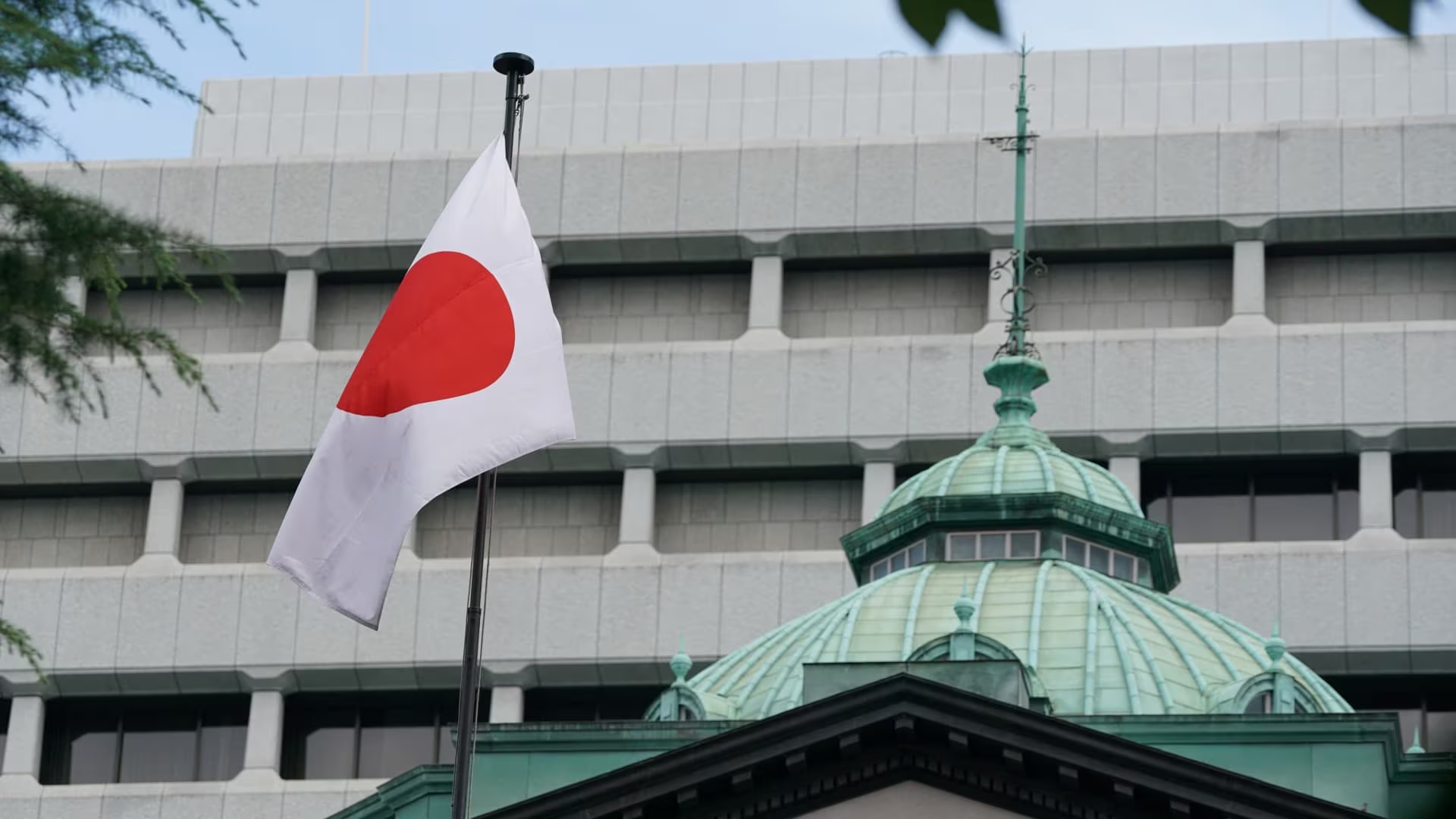
Bank of Japan Maintains Status Quo Amid Political Transition
In a highly anticipated decision that marked the first monetary policy meeting since Sanae Takaichi took office as Prime Minister, the Bank of Japan (BOJ) announced on Thursday, October 30, 2025, that it would hold its benchmark interest rate steady at 0.5%.
The decision, which was widely expected by market analysts, signals the central bank’s commitment to a cautious, data-dependent approach following its recent exit from years of ultra-loose policy. The move comes as the BOJ assesses the durability of inflation and wage growth across the Japanese economy, balancing the need for stability against potential political pressure for continued stimulus.

The Policy Context: Why 0.5% Matters
The 0.5% rate level represents a significant milestone for Japan, reflecting the central bank’s successful pivot away from the negative interest rate policy (NIRP) that defined the past decade. This current rate is intended to anchor short-term borrowing costs while the BOJ continues to manage its extensive bond holdings.
Governor Kazuo Ueda and the Policy Board are navigating a delicate phase: ensuring that inflation, which has consistently exceeded the 2% target, is driven by robust domestic demand and sustainable wage increases, rather than merely temporary cost-push factors. Holding the rate steady allows the BOJ to observe the full impact of its recent tightening moves on corporate investment and household spending.
Key factors influencing the BOJ’s decision to pause included:
- Inflation Assessment: Evaluating whether core inflation remains sustainably above 2% without relying on imported cost pressures.
- Wage Growth: Confirming that the strong wage increases seen in the annual Shunto negotiations are translating into broader consumer purchasing power.
- Global Economic Headwinds: Monitoring risks posed by slowing growth in major trading partners, particularly the United States and China.
- Yen Stability: Assessing the impact of the current rate differential on the Japanese yen, which has been volatile against the U.S. dollar.
The Takaichi Factor and Abenomics 2.0
The timing of this meeting—the first under the new administration of Prime Minister Sanae Takaichi—added a layer of political scrutiny. Takaichi, a prominent figure in the Liberal Democratic Party (LDP), is a known proponent of the aggressive monetary easing and fiscal spending policies championed by the late Shinzo Abe, collectively known as Abenomics.
Her ascent to power earlier in October 2025 raised questions among investors about whether the new government might seek to influence the BOJ toward a more expansionary stance, potentially slowing the pace of monetary policy normalization.
However, the decision to hold rates suggests that, for now, the BOJ is maintaining its operational independence and sticking to its economic mandate, prioritizing stability over political expediency.
Analysts note that while Takaichi supports policies aimed at achieving higher growth and inflation, she has generally respected the BOJ’s autonomy since taking office. Her immediate focus is expected to be on fiscal policy and structural reforms, rather than directly challenging the central bank’s current path toward normalization.

Market Reaction and Forward Guidance
Following the announcement, the reaction in financial markets was relatively muted, reflecting the expectation of a hold. The Nikkei 225 stock index saw modest gains, while the Japanese yen showed little immediate movement against the dollar, stabilizing around its recent trading range.
In his subsequent press conference, Governor Ueda likely reiterated the central bank’s commitment to adjusting policy based on incoming data, particularly focusing on the inflation outlook for the fiscal year 2026.
“We are now in a phase where we must carefully assess the sustainability of the inflation trend and the underlying strength of domestic demand,” Governor Ueda is expected to have stated. “While the risks remain balanced, we require further evidence that the virtuous cycle of wages and prices is firmly established before considering further adjustments to the policy rate.”
The consensus among economists is that the BOJ will likely remain on hold for the remainder of 2025, with any potential rate hike—possibly to 0.75% or 1.0%—dependent on clear signs of accelerating wage growth in early 2026.
Potential Paths for Policy Normalization
The BOJ’s path forward involves two main considerations beyond the short-term rate:
- Quantitative Tightening (QT): The pace at which the BOJ reduces its massive balance sheet of Japanese Government Bonds (JGBs). A faster pace of QT would effectively tighten financial conditions.
- Yield Curve Control (YCC): Although the formal YCC framework was dismantled during the exit from NIRP, the BOJ still influences long-term yields through its bond purchases. Any significant reduction in purchases could signal a further tightening.
For now, the central bank appears content to let the current 0.5% rate work its way through the system, providing a stable environment for the new Takaichi administration to implement its economic agenda.
Key Takeaways
This October 2025 decision underscores the Bank of Japan’s commitment to a deliberate and cautious normalization process, even amidst a change in political leadership.
- Rate Held: The benchmark interest rate remains unchanged at 0.5%, meeting market expectations.
- Political Context: This was the first BOJ meeting since Sanae Takaichi, a proponent of Abenomics, became Prime Minister.
- Independence Affirmed: The decision reinforces the BOJ’s operational independence, resisting any immediate pressure for renewed aggressive stimulus.
- Focus on Data: The central bank continues to prioritize sustainable, domestically driven inflation and robust wage growth before considering further rate hikes.
- Market Stability: Markets reacted calmly, viewing the hold as a sign of policy continuity and stability.
Conclusion: A Steady Hand in a New Political Era
The Bank of Japan’s decision to hold the rate at 0.5% is a clear signal that the institution is prioritizing the long-term health of the economy over short-term political shifts. By maintaining a steady course, Governor Ueda is providing the new Prime Minister, Sanae Takaichi, with a stable monetary backdrop as she begins to implement her economic policies.
For businesses and consumers in Japan, the hold means borrowing costs will remain relatively low compared to global peers, but significantly higher than the zero-rate environment of the past. The focus now shifts to the government’s fiscal strategy and the upcoming wage negotiations in early 2026, which will be critical determinants of the BOJ’s next move toward full monetary normalization.

Original author: Lim Hui Jie
Originally published: October 30, 2025
Editorial note: Our team reviewed and enhanced this coverage with AI-assisted tools and human editing to add helpful context while preserving verified facts and quotations from the original source.
We encourage you to consult the publisher above for the complete report and to reach out if you spot inaccuracies or compliance concerns.