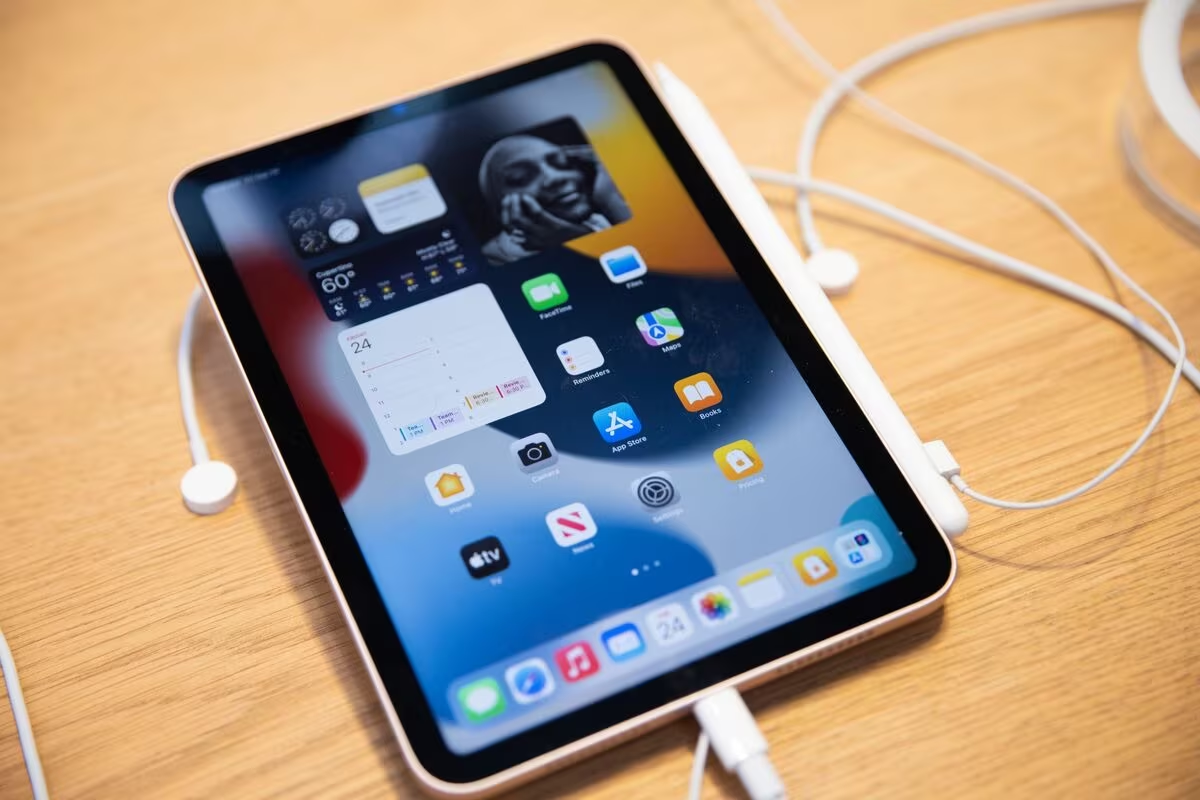
Apple Testing OLED Technology for Core Consumer Devices, Report Says
Apple Inc. is preparing a significant upgrade across its most popular consumer product lines, according to a report from Bloomberg. The company is currently testing new versions of the MacBook Air, iPad Air, and iPad mini, all slated to receive substantially higher-end displays as part of a major product overhaul.
This strategic move signals Apple’s intent to democratize premium display technology, bringing the benefits of superior contrast and brightness traditionally reserved for the high-end Pro models down to the mainstream consumer devices.

The Shift to Next-Generation Display Technology
While the original report refers to these as simply “overhauled” and “higher-end” displays, industry analysis strongly indicates that Apple is preparing to transition these three key devices to OLED (Organic Light-Emitting Diode) technology. This transition is a crucial step in standardizing the display quality across Apple’s entire hardware portfolio.
Currently, OLED is used in the iPhone and Apple Watch, while the high-end iPad Pro and MacBook Pro models utilize Mini-LED technology. Moving the consumer-focused Air and mini lines to OLED would offer immediate, noticeable benefits to users, including:
- Perfect Blacks and Infinite Contrast: Unlike LCD screens, OLED pixels generate their own light and can turn off completely, resulting in true black levels.
- Improved Power Efficiency: OLED panels require less power, potentially extending the battery life of the already highly portable MacBook Air and iPad models.
- Enhanced Color Accuracy: OLED displays are known for their vibrant, highly accurate color reproduction, crucial for creative work and media consumption.
Why This Upgrade is Critical
For the MacBook Air, which currently uses a standard LCD panel, the shift to OLED would be the most dramatic visual upgrade in years, solidifying its position as the premium thin-and-light laptop benchmark. Similarly, the iPad Air and iPad mini would gain a significant competitive advantage over rivals in the tablet market.
“The adoption of OLED across the Air and mini lines is not just an incremental update; it’s a fundamental change in the user experience. It closes the gap between the standard consumer models and the Pro lineup, forcing Apple to further differentiate its high-end devices through processing power and professional features,” according to industry analysts.
Implications for Apple’s Product Segmentation
Introducing OLED to the standard consumer lines raises important questions about how Apple will continue to differentiate its high-end Pro models, which currently rely on Mini-LED technology for their superior brightness and localized dimming zones.

The Future of the Pro Lineup
It is widely anticipated that the iPad Pro and MacBook Pro lines will eventually transition to Tandem OLED technology. Tandem OLED uses two emission layers, offering even higher brightness and greater longevity than the single-layer OLED panels expected in the Air and mini models. This tiered approach allows Apple to maintain clear segmentation:
- Consumer (Air/Mini): Single-layer OLED (Superior contrast, good efficiency).
- Professional (Pro): Tandem OLED (Highest brightness, maximum longevity, ProMotion high refresh rates).
This display roadmap ensures that customers buying the Pro models still receive a demonstrably superior visual experience tailored for demanding professional workflows, while mainstream users benefit from a massive leap in quality over previous generations.
Key Takeaways for Consumers
This planned display overhaul, currently in the testing phase, represents one of the most significant hardware upgrades for Apple’s most popular devices in the 2025 product cycle. Here are the essential points readers need to know:
- Targeted Devices: The MacBook Air, iPad Air, and iPad mini are all expected to receive the display upgrade.
- Technology: The upgrade is anticipated to be a shift to OLED panels, offering perfect blacks and improved battery life.
- Status: The new versions are currently under internal testing, suggesting a potential release timeframe sometime in late 2025 or early 2026.
- User Benefit: Consumers will experience dramatically better contrast, color vibrancy, and media consumption quality without needing to purchase the more expensive Pro models.

Conclusion: Elevating the Standard
Apple’s decision to bring higher-end displays to the MacBook Air, iPad Air, and iPad mini is a clear response to increasing competition and consumer demand for premium visual experiences. By standardizing advanced display technology across its core lineup, Apple ensures that even its entry-level and mid-range devices deliver the high-quality experience the brand is known for, reinforcing its competitive edge in the highly lucrative portable computing market. This move sets a new benchmark for what consumers should expect from portable devices in the coming years.
What’s Next
As these products are currently in the testing phase, the next steps will involve finalizing production lines and supply chain agreements, particularly with display manufacturers like Samsung and LG Display. Consumers should expect further leaks and official announcements regarding these highly anticipated models as the 2025 product cycle progresses, likely focusing on the integration of new processors alongside the display upgrades.
Original author: Mark Gurman
Originally published: October 28, 2025
Editorial note: Our team reviewed and enhanced this coverage with AI-assisted tools and human editing to add helpful context while preserving verified facts and quotations from the original source.
We encourage you to consult the publisher above for the complete report and to reach out if you spot inaccuracies or compliance concerns.