
Tech Giants Accelerate Infrastructure Spending, Bolstering U.S. Economy
The massive capital expenditure (CapEx) dedicated to artificial intelligence infrastructure by the world’s largest technology companies is not just reshaping the digital landscape; it is rapidly becoming a critical pillar of the U.S. economy in late 2025. Companies like Google, Meta Platforms, and Microsoft are committing billions of dollars toward building and expanding hyperscale data centers, a spending spree that is injecting significant momentum into construction, manufacturing, and energy sectors.
This investment surge, driven by the intense competition in the AI arms race, is expanding an existing boom and helping to sustain overall economic growth, according to recent industry analyses.
The Scale of the AI Infrastructure Arms Race
The demand for ever-more powerful AI models—from training large language models (LLMs) to running complex generative applications—requires an unprecedented level of physical infrastructure. This necessity has translated directly into massive financial commitments from the tech sector.
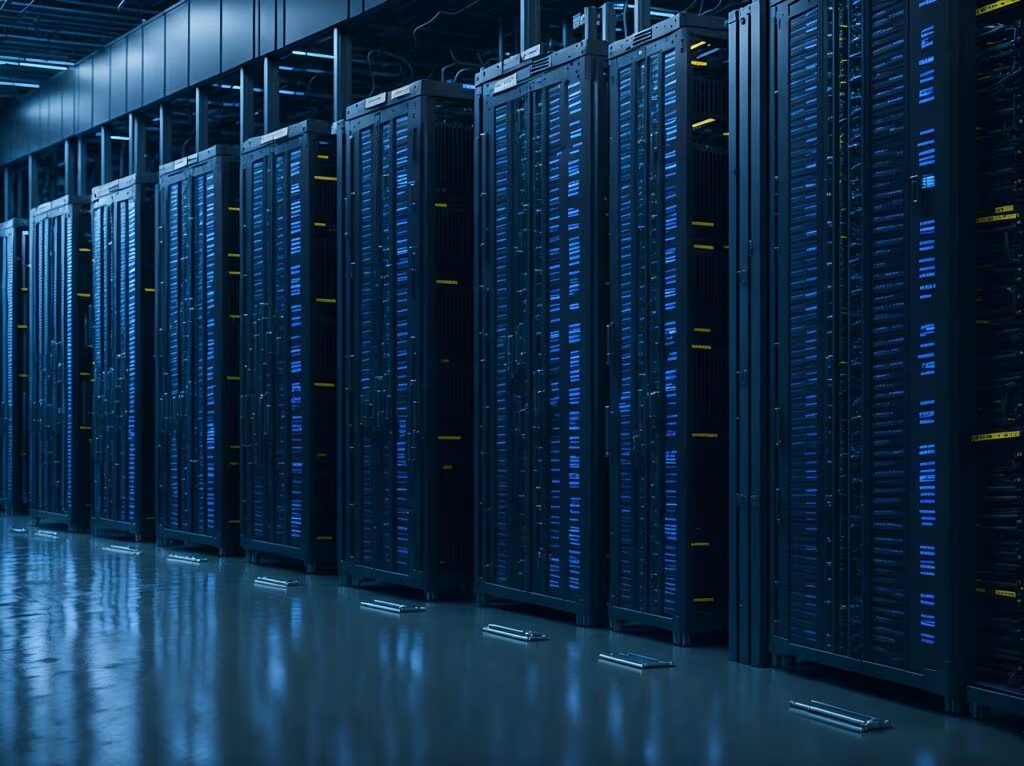
For companies like Google, Meta, and Microsoft, the primary focus of this spending is twofold:
- Data Center Construction: Acquiring land, building massive facilities, and installing specialized cooling and power systems necessary to house AI hardware.
- Advanced Hardware Procurement: Purchasing high-end accelerators, primarily GPUs from companies like Nvidia, and specialized networking equipment required for parallel processing.
These investments are not marginal additions; they represent a fundamental shift in corporate spending priorities. Historically, tech CapEx focused on general cloud capacity; now, it is heavily skewed toward AI-specific compute power. This shift ensures sustained demand for high-value components and skilled labor.
Why the Investment is Accelerating Now
As of October 2025, the acceleration of spending is tied to the maturation of AI models and the commercialization phase. The initial research and development have transitioned into a need for vast, scalable resources to deliver AI services to enterprise and consumer markets globally. Furthermore, the race to achieve technological parity or superiority means that delaying infrastructure build-out is seen as a competitive liability.
The Economic Multiplier Effect
While the primary goal of the tech giants is technological dominance, the secondary effect is a substantial economic stimulus. This phenomenon is known as the economic multiplier effect, where every dollar spent on infrastructure generates several dollars of economic activity downstream.
Key Areas Benefiting from AI CapEx:
- Construction and Engineering: Data centers are massive construction projects requiring thousands of workers, from civil engineers to electricians. This provides a steady stream of high-wage jobs and demand for materials like steel and concrete.
- Semiconductor Manufacturing: The sustained, high-volume demand for advanced chips—especially AI accelerators—is stabilizing and growing the domestic semiconductor industry, which is crucial for U.S. technological independence.
- Energy Sector: Data centers are enormous consumers of electricity. This drives investment in power generation, transmission infrastructure, and, increasingly, renewable energy projects to meet the sustainability goals of the tech companies.
- Supply Chain Logistics: The movement of heavy equipment, servers, and cooling technology creates robust demand for logistics, shipping, and specialized installation services.
“The sheer scale of these projects means they are acting as a significant counterweight to potential slowdowns in other economic sectors,” noted one industry analyst. “The AI infrastructure build-out is essentially functioning as a massive, privately funded stimulus package.”
Challenges and Future Implications
While the spending boom is currently a net positive for the economy, the rapid expansion introduces several long-term challenges that policymakers and industry leaders must address.
1. Energy Consumption
The immense power needs of AI data centers are straining regional electrical grids. The industry faces pressure to rapidly deploy renewable energy solutions and optimize chip efficiency to prevent energy shortages and mitigate environmental impact.
2. Supply Chain Constraints
Continued reliance on specialized hardware, particularly advanced GPUs, means the supply chain remains vulnerable to geopolitical tensions and manufacturing bottlenecks. Delays in chip delivery can slow down data center deployment and, consequently, the delivery of new AI services.
3. Talent Competition
There is fierce competition for specialized talent, including AI engineers, data center architects, and high-voltage electricians. This drives up wages but also creates potential labor shortages in other critical infrastructure areas.
Looking ahead to 2026, analysts predict that this infrastructure spending will remain robust, potentially shifting from pure construction to optimization and operational efficiency as the initial wave of data centers comes online. However, the foundational capital expenditures are expected to continue driving economic metrics for the foreseeable future.
Key Takeaways: AI Investment and the Economy
For the reader seeking to understand the economic impact of the AI boom, here are the essential points:
- Primary Driver: Massive capital expenditure (CapEx) by tech giants (Google, Meta, Microsoft) on hyperscale data centers is the main economic engine.
- Economic Role: This spending is acting as a significant driver of U.S. economic growth, expanding a boom that began earlier in the decade.
- Benefiting Sectors: The stimulus is felt across construction, semiconductor manufacturing, and the energy sector.
- Timeframe: The acceleration is evident in late 2025, driven by the need to commercialize and scale advanced AI models.
- Future Outlook: Spending is expected to remain high into 2026 as the AI arms race continues, though challenges related to energy and supply chain persist.
Conclusion
The narrative surrounding artificial intelligence often focuses on algorithms and software, but the reality on the ground is that the AI revolution is fundamentally an infrastructure revolution. The billions being poured into data centers by the world’s leading tech companies are creating tangible economic activity—jobs, construction, and demand for advanced hardware. This sustained investment ensures that the AI sector remains a powerful and perhaps indispensable force in maintaining the current economic momentum, positioning the U.S. at the forefront of the global technological transition.
Original author: Gerrit De Vynck, Naomi Nix
Originally published: October 30, 2025
Editorial note: Our team reviewed and enhanced this coverage with AI-assisted tools and human editing to add helpful context while preserving verified facts and quotations from the original source.
We encourage you to consult the publisher above for the complete report and to reach out if you spot inaccuracies or compliance concerns.